CredimAsbestos removal & demolition
Services

Our specialities

  • Asbestos pipe insulationWhite plaster around your heating pipes
  • Asbestos vinyl floor & black glueVinyl, tiles and bitumen glue
  • Asbestos plasterPlaster on walls and ceilings
  • Asbestos roof & sheetsEternit, slates and underroof
  • What does asbestos removal cost?

More applications

  • Asbestos corrugated sheets
  • Asbestos panels
  • Asbestos flue & chimney
  • Asbestos facade
  • Asbestos underroof

Who we help

  • For homeownersRenovation or sale
  • For professionalsContractors, syndics, industry
  • Demolition works
  • Certified asbestos remover
Techniques

The three legal techniques

  • Hermetic zoneNegative pressure for damaged asbestos
  • GlovebagOnly for pipes in the open air
  • Simple handlingBonded material, low risk
  • Which technique do I need?
Info & advice

Know what's in your home

  • Recognising asbestos
  • Asbestos testing
  • Is asbestos dangerous?
  • Asbestos information

Certificate & regulations

  • Asbestos certificate (sale)
  • Certificate for common areas
  • Asbestos inventory
  • Demolition notification

Costs, grants & disposal

  • What does asbestos removal cost?
  • Grants in Flanders
  • Can I remove asbestos myself?
  • Asbestos disposal
  • Asbestos container hire

About Credim

  • About CredimCertified team from Stabroek
  • ProjectsOur work in pictures
  • ContactCall or email us
info@credim.be09 396 64 56Free site visit
CredimAsbestos removal & demolition

Certified asbestos remover for the whole of Flanders. Safe, discreet and following the legal techniques, for homeowners and professionals alike.

  • Conservenweg 6C, 2940 Stabroek
  • 09 396 64 56
  • info@credim.be

Asbestos removal

  • Asbestos pipe insulation
  • Asbestos vinyl floor
  • Asbestos plaster
  • Asbestos roof & sheets
  • Demolition works
  • For homeowners
  • For professionals

Our techniques

  • Hermetic zone
  • Glovebag
  • Simple handling
  • Which technique?

Info & advice

  • Recognising asbestos
  • Asbestos certificate
  • Asbestos disposal
  • Premie Vlaanderen
  • Asbestos info

Credim

  • About Credim
  • Projects
  • Contact
  • Free site visit

Unsure about asbestos in your home? Request a free site visit.

Free site visit

Service area: all of Flanders

  • Antwerpen
  • Gent
  • Brugge
  • Leuven
  • Mechelen
  • Aalst
  • Sint-Niklaas
  • Kortrijk
  • Hasselt
  • Genk
  • Oostende
  • Roeselare
  • Turnhout
  • Lier
  • Lokeren
  • Dendermonde
  • Beveren
  • Brasschaat
  • Vilvoorde

Information about grants, prices, deadlines and legislation is indicative and may change. Always check the current rules with the competent authorities.

© 2026 Credim BV · BE 0759.644.909

Privacy policyTerms and conditionsWebsite by Varamedia
Get in touch
  1. Credim BV
  2. Advice
  3. Recognising asbestos in your home
Recognising asbestos

Recognising asbestos in your home

A guide to recognising asbestos in your home, with attention to the risks and what you are allowed to do yourself.
Free site visitRequest a quote
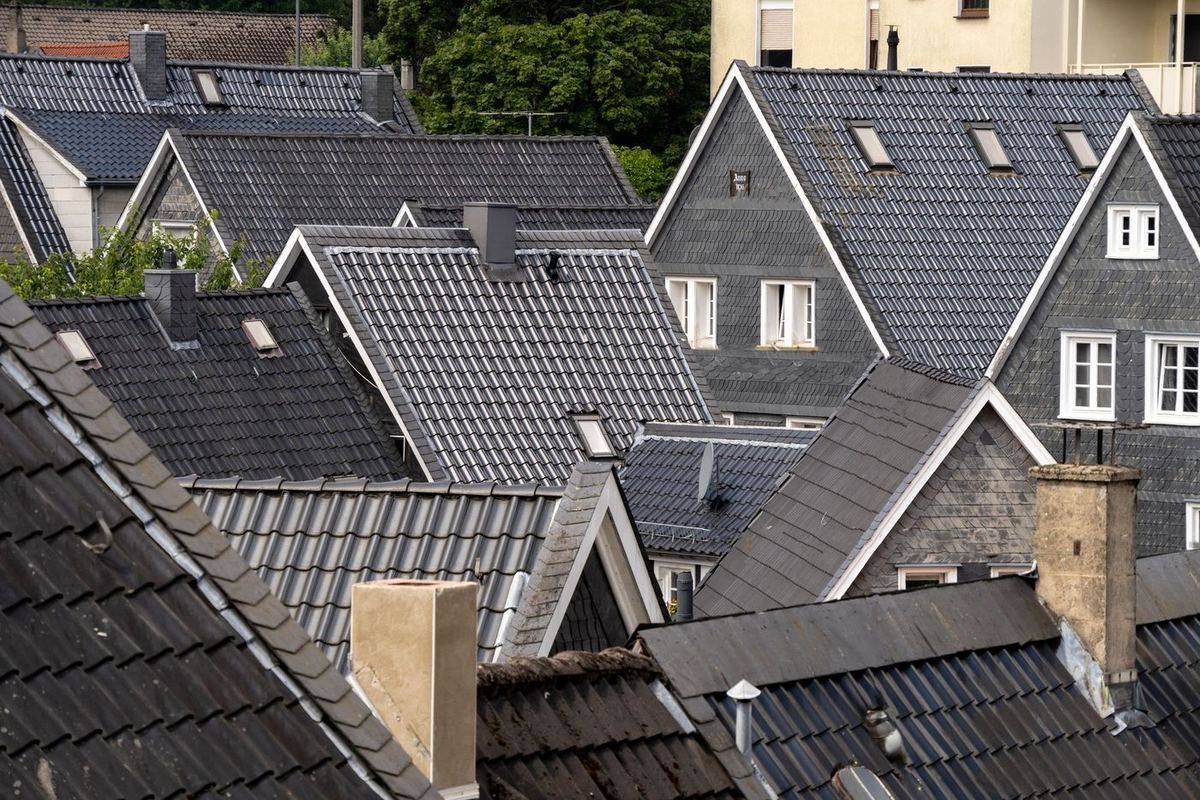
Grey tiled roofs with roof windows and chimneys in a residential area
On this page
  1. 01Common applications in and around the house
  2. 02Friable or non-friable?
  3. 03Why you cannot rely on your eyes
  4. 04Do it yourself or not?
  5. 05Credim's approach

Asbestos is not uncommon in Flemish homes built before 2001. It is often found in places you wouldn't immediately think of. A corrugated roof, an old chimney, a vinyl floor in the utility room. If you are renovating or buying a house, it is wise to first know where asbestos might be.

Common applications in and around the house

The list below is not exhaustive, but it is a good starting point. The most common locations are:

  • Corrugated sheets and slates: on roofs of sheds, carports, and outbuildings. Often grey, but they can also be painted.
  • Under-roofing: the boards beneath your roof tiles. These are sometimes made of asbestos cement.
  • Pipe insulation: around central heating pipes in the basement, recognisable by a white or grey crumbly layer, often wrapped in hessian cloth.
  • Vinyl floors and black adhesive: old vinyl sheets and tiles can contain asbestos in the backing or in the black bituminous adhesive.
  • Flower pots, chimneys, and cladding panels: asbestos can also be found outdoors, for example in decorative chimneys, cladding, or flower pots.

These are the classics, but asbestos is also found in window sills, door panels, insulation behind radiators, and even in some ceiling tiles. It can therefore turn up in any part of a home built before the nineties.
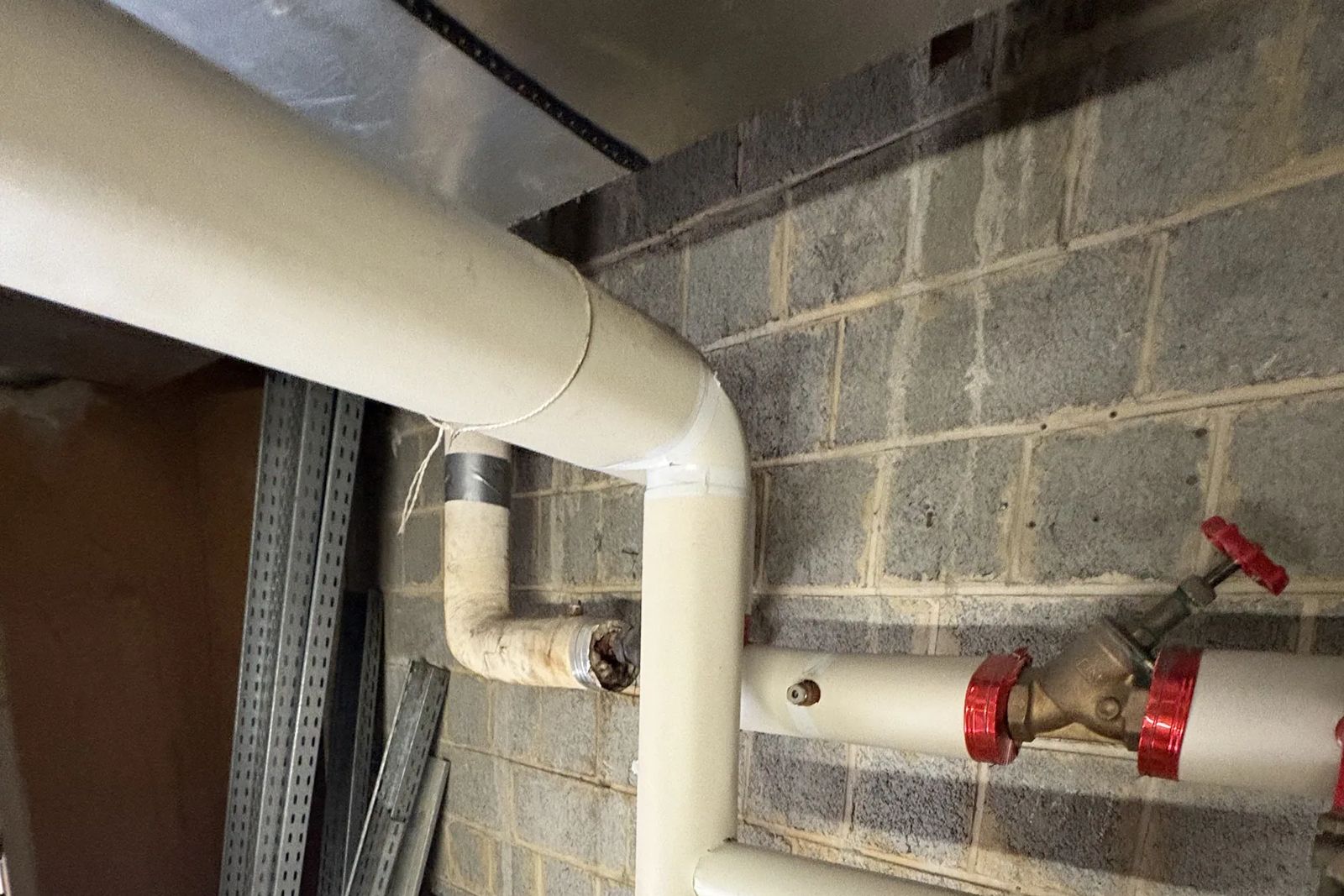
White insulated pipe with a bend along a concrete block wall, and a valve with a red handwheel
Photo: Credim

Friable or non-friable?

The distinction is important because it determines what you are allowed to do yourself and how great the risk is. Non-friable asbestos, such as corrugated sheets and slates, has a firm cement matrix. The fibres are bound and are only released when you saw, drill, or break it. Friable asbestos is much more fragile. Think of pipe insulation or the black adhesive under a vinyl floor. These can release fibres even with a light touch.

Friable asbestos is therefore more dangerous and should never be removed by yourself. Non-friable asbestos may be tackled yourself under certain conditions, but there is more to it than you might think. Proper asbestos removal requires knowledge of the regulations and the right techniques.

Why you cannot rely on your eyes

Visually recognising asbestos is not an exact science. That white layer around your pipes may look like plaster, but it is not. And a vinyl tile can look innocent while the backing still contains asbestos. Even experienced professionals are not always able to say with certainty whether a material contains asbestos. The only reliable way is a sample analysis by an accredited laboratory. They analyse the material under a microscope and provide a definitive answer.

As long as you do not know whether asbestos is present, it is best to leave the material alone. Do not scratch, sand, or break it. This keeps the risk minimal.

Do it yourself or not?

For non-friable asbestos up to 35 m², you may as a private individual do it yourself, provided the material is undamaged and screwed (not glued or nailed). You must also submit a demolition notification via the Omgevingsloket. That sounds simple, but in practice there is a lot involved. You must keep the asbestos wet, pack it airtight in foil of at least 100 microns, and dispose of it correctly. At the recycling centre, you may bring in 200 kg per year free of charge, but you are not allowed to transport friable asbestos yourself.

Damaged material, friable asbestos, or glued floor coverings? You must not start on those. They must be removed by an accredited removal company. This is not out of paternalism, but because the risk of fibre release is then too great. A single exposure can already be harmful.

Credim's approach

At Credim, we work with the three statutory techniques: the hermetic zone, the glove bag, and the simple handling. Which one we use depends on the material and its condition. Indoor pipe insulation, for example, we always remove in a hermetic zone. We seal the room airtight and put it under negative pressure. We do the same for damaged or friable asbestos. That negative pressure is there to stop dust from reaching the rest of your home.

Need an asbestos certificate? For that, you must go to a certified asbestos expert. Credim is an accredited removal company and does not issue certificates itself. We welcome the certificate drawn up by the expert and remove the asbestos indicated on it. Want to know more about how to recognise pipe insulation or about recognising black adhesive? Then read those pages. Or contact us for a no-obligation discussion about your situation.

Good to know

Unsure whether a material contains asbestos? Have a sample taken by an accredited lab. That way you will know for sure and avoid unnecessary risks.

Frequently asked questions

How can I recognise asbestos in my home?
Recognising asbestos is not always possible with the naked eye. Look out for typical applications such as corrugated sheets, slates, roof underlay, pipe insulation around central heating pipes, old vinyl flooring or black adhesive. You can only be sure after a sample has been taken by an accredited lab.
What is the difference between bonded and non-bonded asbestos?
Bonded asbestos is firmly embedded in cement or another material and only releases fibres when worked on. Non-bonded asbestos, such as pipe insulation or black adhesive, is brittle and can already release fibres when touched. That is why stricter rules apply to non-bonded asbestos.
Can I remove asbestos myself?
You may only remove bonded, undamaged asbestos yourself up to 35 m², and only if it is screwed in place and you have submitted a demolition notification. Damaged material, friable asbestos and glued floor coverings must always be removed by an accredited removal contractor.
How do I know if my vinyl floor contains asbestos?
Old vinyl sheets and tiles can have an asbestos-containing backing. The black bituminous adhesive underneath can also contain asbestos. A lab can provide certainty through sample analysis. As long as you are not sure, leave the floor alone.
Why should asbestos removal be done by an accredited company?
Asbestos fibres are dangerous to health. An accredited company like Credim uses the right techniques and protective equipment to prevent fibre release. Moreover, for certain applications it is legally mandatory to engage an accredited removal contractor.

Also interesting

  • Recognising asbestos pipe insulation
  • Recognising black adhesive
  • Having asbestos tested
  • Is asbestos dangerous?
  • Asbestos removal
No-obligation and free

In doubt about asbestos? Request a free site visit.

An accredited expert will come by, assess the situation and give you a clear, no-obligation proposal.

  • Free site visit
  • Accredited & insured
  • Fast and discreet
Free site visitCall 09 396 64 56