Do you recognise an old vinyl floor with black adhesive or an asbestos-containing backing? We remove it safely and in accordance with regulations.
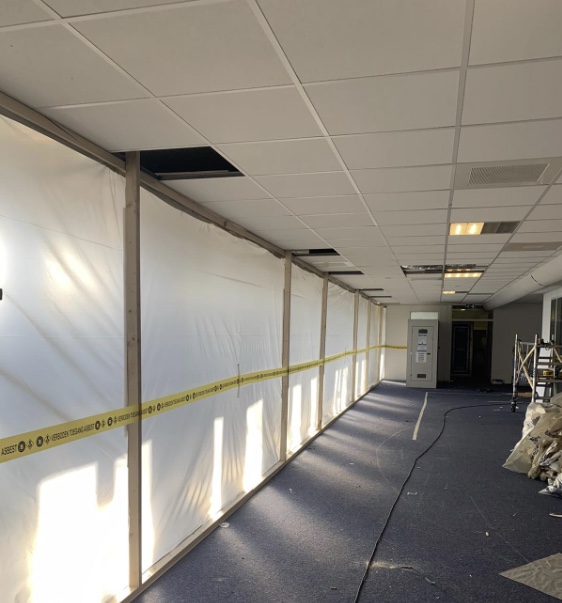
Anyone buying or renovating a house from the 1950s to the 1980s will sooner or later come across an old vinyl floor. Often it is a worn sheet in the kitchen or vinyl tiles in the hallway. What many people don't know: these floors can contain asbestos. Not in the wear layer, but in the backing. And then there is that black adhesive that holds the floor down. This bituminous cutback adhesive was commonly used between 1955 and 1985 and often contains asbestos.
The problem is not the vinyl itself. As long as it is intact and you don't sand it, the risk is limited. The risk lies in the brittle, black adhesive layer that you expose when you start pulling up the floor. This layer crumbles easily and then releases fibres. That is precisely why removing such a floor should be left to a licensed asbestos removal contractor.
Asbestos in vinyl floors is usually found in the backing of the sheet or in the tiles themselves. Sometimes you can see a grey or brown fibrous layer beneath the decorative top layer. With vinyl tiles from that period, the asbestos is often incorporated into the tile. The black adhesive underneath is a second point of attention. This adhesive is not always easy to distinguish from ordinary bitumen. You can recognise asbestos-containing black adhesive by its brittle structure and typical smell, but you can only be 100% sure through sampling.
Have this sampling carried out by a certified asbestos expert. They will also determine whether there are any other asbestos applications in the home. The result is recorded in an asbestos certificate. This certificate has been mandatory since November 2022 when selling a home built before 2001. By 2032, every owner of such a building must have a certificate. For shared properties, the deadline for the common parts is 31 December 2026. An asbestos certificate is drawn up by an ADI and issued by OVAM. As a licensed removal contractor, we do not draw up certificates, but we do remove the asbestos that the certificate identifies.
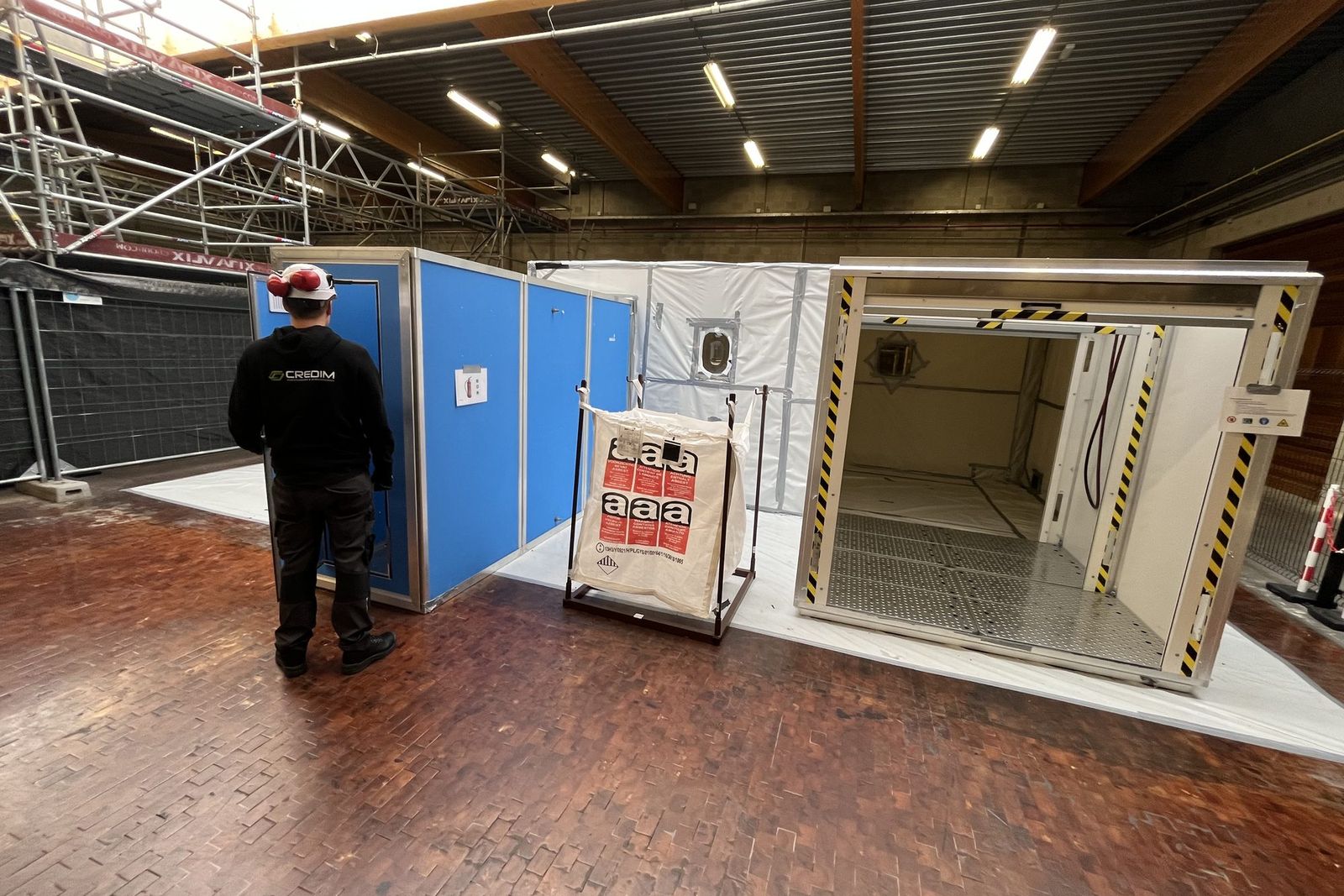
Many people think: I'll just pull up that vinyl myself. You can, but the law is strict. A private individual may only remove bonded, undamaged asbestos up to 35 m², and only if it is screwed down and not glued or nailed. A vinyl floor with black adhesive is glued. This means that such a floor falls outside what you are allowed to do yourself. Non-bonded asbestos, such as some floor coverings, is also always a job for a licensed company. So a private individual is not allowed to remove an asbestos-containing vinyl floor themselves.
In addition, you must submit a demolition notification for every asbestos removal via the Environmental Counter (Omgevingsloket). We also arrange this for you. Asbestos must be packed airtight in foil of at least 100 microns. At the recycling centre, you may bring in up to 200 kg per year free of charge, but you are not allowed to take non-bonded asbestos to the centre yourself. We arrange the transport and final processing.
How we remove an asbestos-containing vinyl floor depends on the condition of the material. If the sheet or tile is still intact and the adhesive layer is not damaged, we can sometimes work with a simple handling. This technique is used for bonded material with a low risk of fibre release. The asbestos level must remain below 0.01 fibres per cm³. We then work with adapted tools and a vacuum cleaner with a HEPA filter, but without full containment.
As soon as the adhesive layer is brittle, or the sheet is damaged, we switch to a hermetic zone. This is a sealed area with negative pressure. Our staff wear disposable coveralls and respiratory protection. The floor is kept wet to avoid dust, and the material is carefully packed in airtight bags. After the work, we measure whether there are still fibres in the air.
This approach takes more time, but it is the only correct way to remove a high-risk floor. What determines the cost of asbestos removal includes the surface area, the condition of the material and the accessibility. You will receive a clear, tailored quote from us.
Have you found an old vinyl floor and want to know if it contains asbestos? Then first contact an asbestos expert for a sample. Once you know what you have, we can help you with the removal.
An expert comes by, assesses the situation and advises on the right technique.
You receive a clear, no-obligation quote.
We seal off the area and remove the asbestos in accordance with legal regulations.
The asbestos is removed and processed in an airtight manner.
Certified asbestos removal contractor with intensively trained staff.
Hermetic zone, glove bag and simple procedure in-house.
Strict containment and air monitoring protect people and the environment.
A large team with years of experience: we act quickly for your site.
A certified expert comes by, assesses the situation and gives you a clear, no-obligation proposal.
* Premium amounts, subsidy conditions and legal deadlines may change. The information on this page is indicative; always check the current rules with OVAM, your municipality or via Mijn VerbouwPremie. Last reviewed: September 2026.