Disposing of asbestos correctly is not just about throwing it in a skip. Read here how it should be done and when to call in an accredited company.
If you discover asbestos during a renovation, you face the question: how do I get rid of it safely? The answer is not as simple as "drive to the recycling centre". There is a lot involved, and the rules are strict. As long as you leave the material alone, there is little to worry about. But as soon as you remove it, it must be sealed airtight and disposed of correctly.
Asbestos fibres must not be released under any circumstances. That is why the law requires that asbestos waste is packaged airtight in a sturdy film of at least 100 microns thick. This is not ordinary cling film, but a special type that you can find at a DIY store or at an approved processor.
In practice, this looks like this: you place the asbestos sheets or asbestos-containing material on the film, fold the sides over it and seal everything well with sturdy tape. Preferably use a double layer or a sturdy big bag. These big bags are ideal because they are large enough for corrugated sheets and easy to stack.
Important: damaged sheets or friable asbestos (such as pipe insulation) may not be packaged or transported by yourself. This involves a lot of fibre release, and that is exactly the moment when an approved asbestos removal contractor comes into the picture.
For small quantities of bonded asbestos (such as a few corrugated sheets from a canopy), you may go to the recycling centre as a private individual. In Flanders, you may bring in 200 kg per household per year free of charge. This is handy for those who complete a small job. But note: the centre only accepts correctly packaged asbestos, and you must be able to demonstrate that it is bonded asbestos.
Friable asbestos, such as the insulation around old heating pipes, may not be brought to the recycling centre by yourself. This material is too dangerous to transport without the proper precautions. Damaged asbestos sheets or glued floor coverings also do not belong in your car.
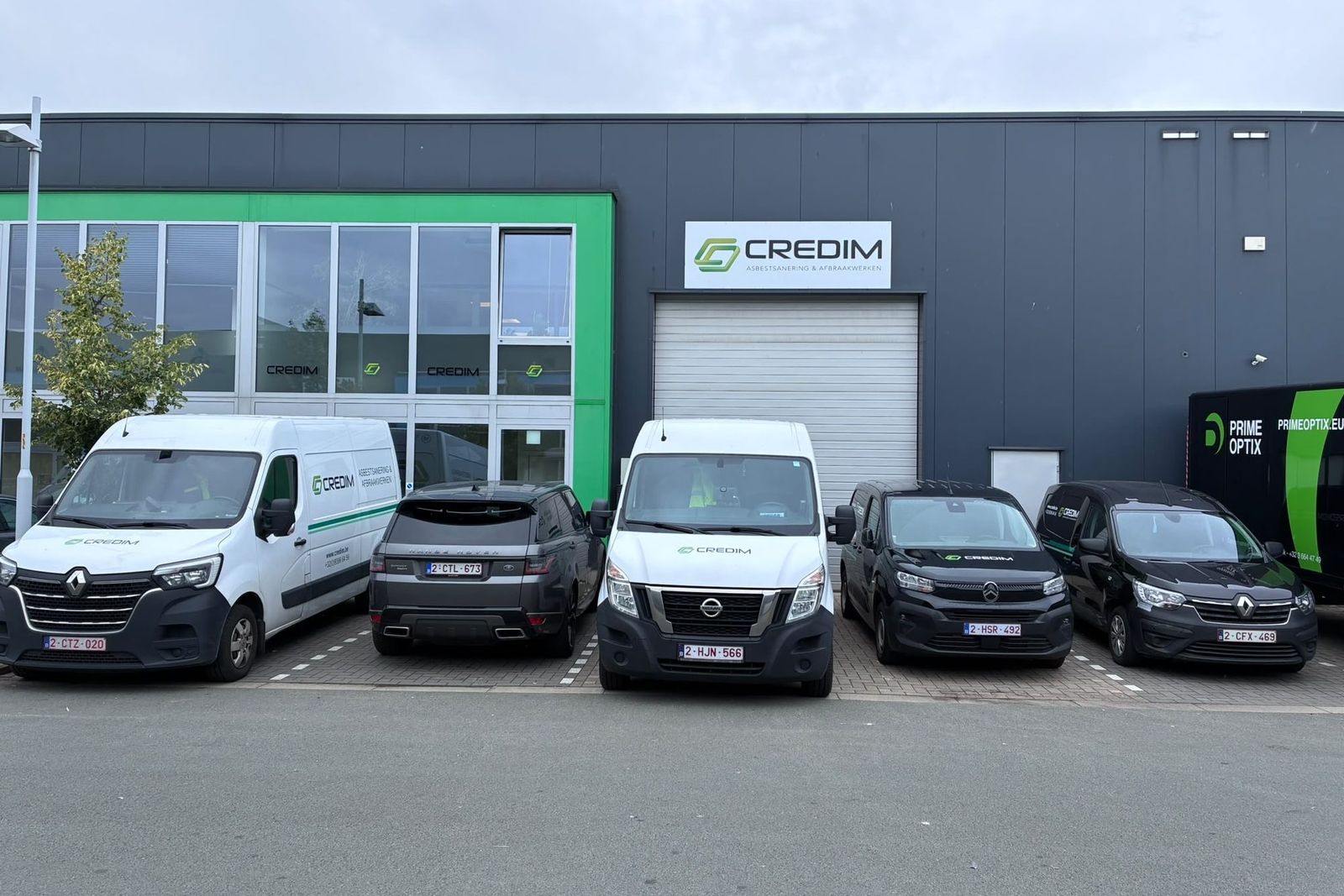
As soon as it involves more than a few square metres of undamaged sheets, or when the material is damaged or friable, it is time to call a professional. An approved asbestos removal contractor such as Credim has the knowledge, the resources and the permits to remove and dispose of asbestos safely.
During a remediation by Credim, we arrange the complete disposal and processing. You do not need to hire a container, buy film or drive to the recycling centre yourself. We take care of the airtight packaging in big bags, transport to an approved processor and the necessary documents. This saves you time.
Some people want to remove asbestos themselves to save costs. That is possible, but only under strict conditions. As a private individual, you may remove a maximum of 35 m² of bonded, undamaged asbestos that is screwed (not glued or nailed). In addition, you must submit a demolition notification via the Omgevingsloket. Anything that does not meet those conditions is forbidden territory for DIY enthusiasts.
Are you unsure whether you are allowed to do it yourself? Then check the page about removing asbestos yourself where we list the rules. In many cases, calling in an approved company is not only safer, but also easier. This limits the risk of fines and damage to your health.
Disposing of asbestos is therefore not a job to take lightly. Whether you bring a few sheets to the recycling centre or have a full remediation carried out, always ensure that the material is correctly packaged and that you follow the rules. This way you protect yourself, the people around you and the environment.
An accredited expert will visit, assess the situation and provide you with a clear, no-obligation proposal.