We remove asbestos in accordance with FOD WASO regulations.
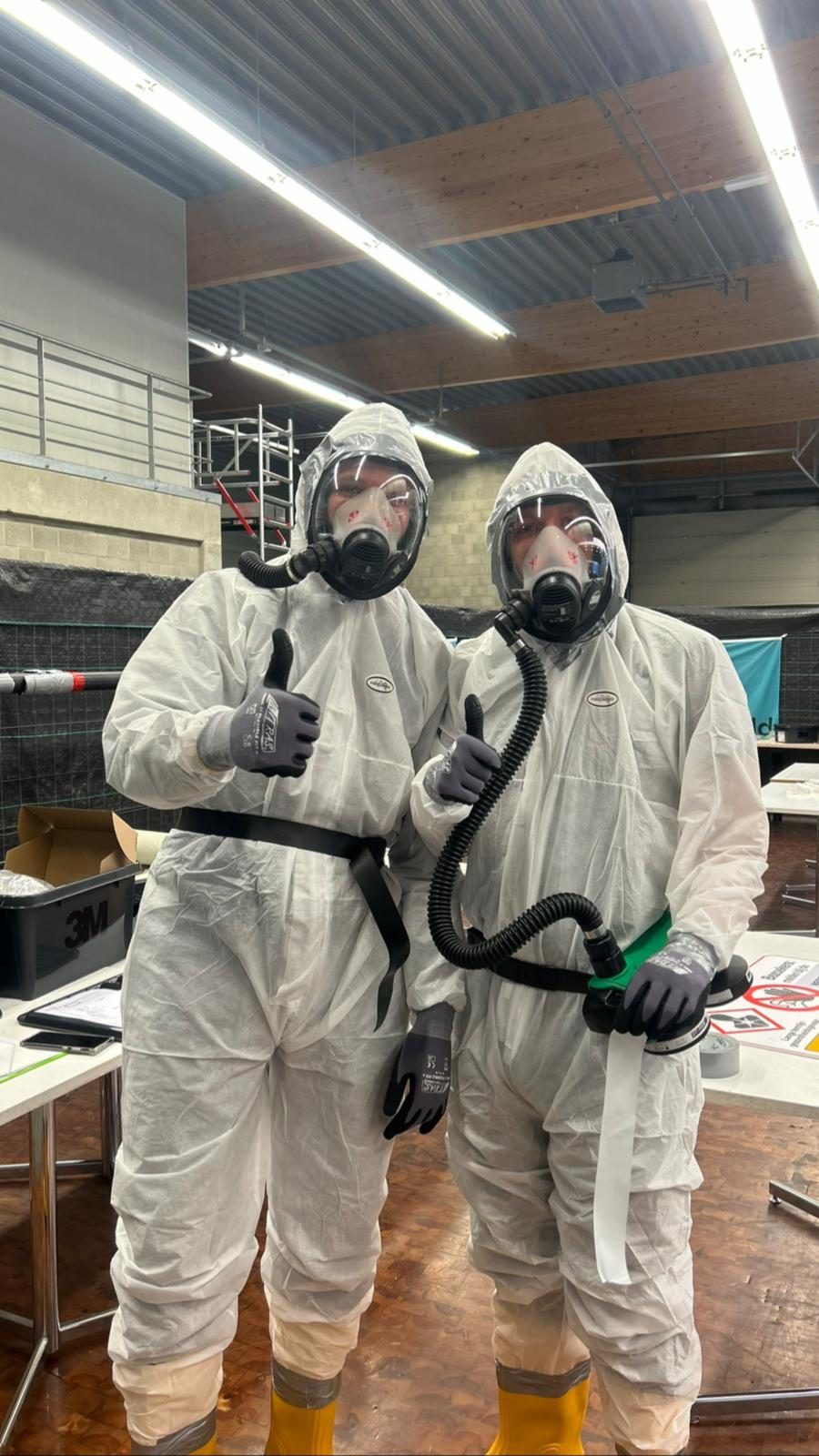
Once the asbestos certificate has been drawn up by a certified asbestos expert, the real work begins for many owners: the remediation. Especially with damaged or friable asbestos, this is not something to try yourself. The law requires you to use a licensed asbestos removal contractor for this. And that's a good thing, because with the right knowledge and equipment, a difficult job becomes manageable.
In Belgium, a company that removes asbestos must be recognised by the Federal Public Service Employment, Labour and Social Dialogue (FOD WASO). That recognition is not a piece of paper you hang on the wall. It means that our staff have received specific training, that we have the right measuring equipment and that we organise our site so that your living environment is protected against fibres. Waste management and protective equipment are also checked. A recognised company must therefore demonstrate that it has mastered its work.
Credim has been recognised as an asbestos removal contractor since 2021. We work with the three legal techniques: the hermetic zone for the most difficult situations, the glovebag for pipe insulation in the open air and the simple handling for bonded sheets that pose a low risk. Which technique we use depends on the material and its condition. You can read more about this on our page about the different asbestos techniques.
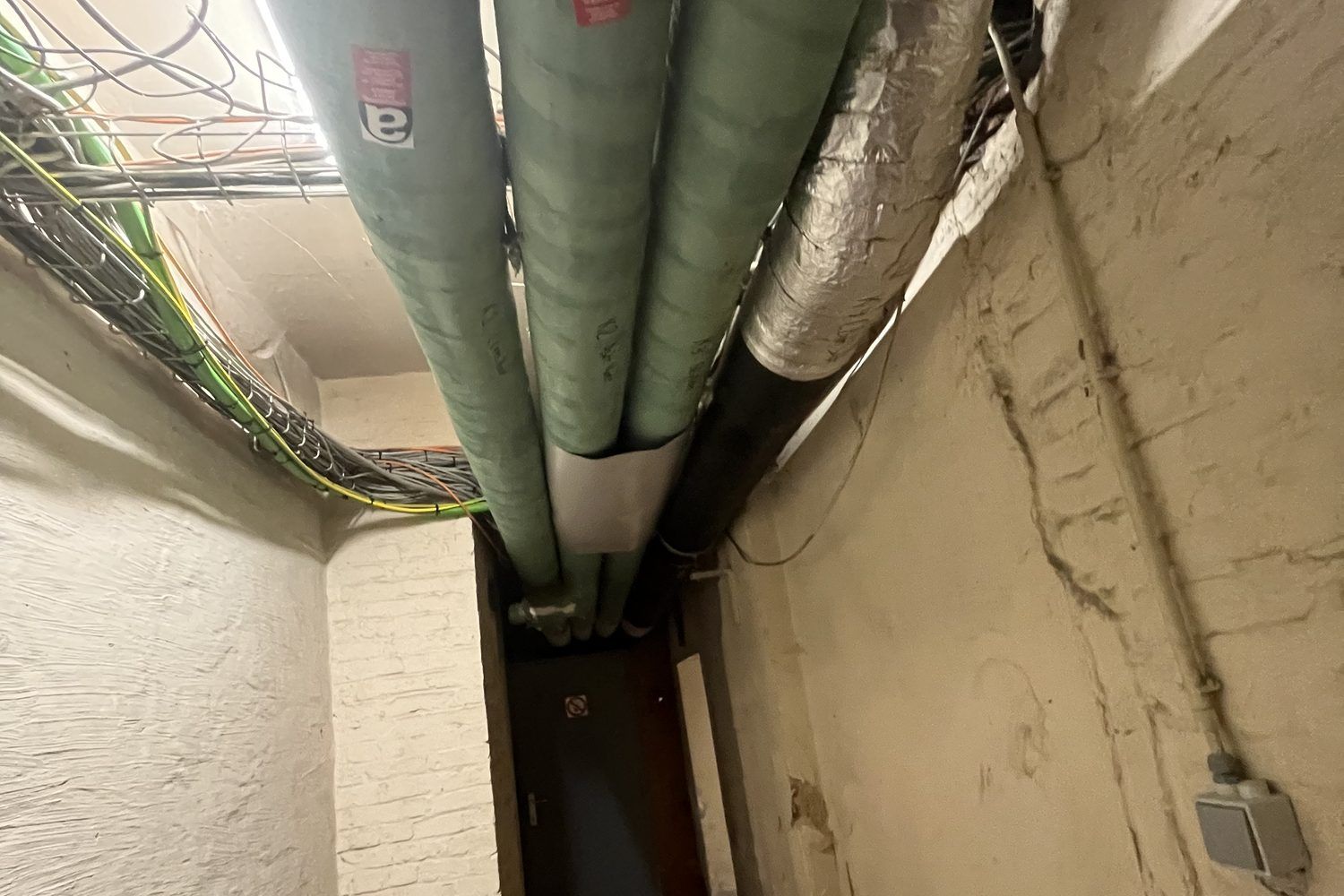
The rule is clear: for non-bonded asbestos, such as insulation around old heating pipes, and for damaged asbestos, a licensed removal contractor is always mandatory. Also, if the material is glued or nailed, or if you want to remove more than 35 square metres, you must call us. A private individual may only remove undamaged, bonded sheets that are screwed on themselves, and only after a notification in the Environmental Desk.
That limit is there for a reason. Once asbestos fibres are released, they are invisible but can remain in your lungs for decades. So going at it yourself with a scraper in a basement from the seventies is not a good idea. You cannot see what is in the air, and a regular dust mask will not stop those tiny needles.
We do not work on gut feeling, but according to a fixed step-by-step plan. First, the area is sealed off and, where necessary, placed under negative pressure. Then we remove the asbestos as much as possible in its entirety and wrap it airtight in foil of at least 100 microns. Finally, we measure afterwards to see if there are still fibres in the air.
Take asbestos removal in general: whether it concerns a piece of corrugated roof sheet or a complete basement full of pipe insulation, we carry it out in accordance with the applicable regulations. You do not have to guess whether you are allowed to do it yourself or not. We know the rules and apply them.
One last reassurance: we do not draw up asbestos certificates ourselves. For that, you hire a certified asbestos expert, who registers the certificate via OVAM. But as soon as that certificate is there and the remediation is on the schedule, we are ready. From Stabroek to the Westhoek, we come everywhere in Flanders.
An expert visits, assesses the situation, and advises on the appropriate technique.
You receive a clear, no-obligation quote.
We seal off the area and remove the asbestos in line with legal regulations.
The asbestos is transported and processed in an airtight manner.
Certified asbestos removal contractor with intensively trained staff.
Airtight zone, glove bag, and simple handling carried out in-house.
Strict containment and air monitoring protect people and the environment.
A large team with years of experience: we act quickly for your site.
Recognition and certificates
A certified expert visits, assesses the situation, and gives you a clear, no-obligation proposal.