Not every asbestos removal requires the same approach. A few questions will help you find out which technique your situation requires.
Anyone having asbestos removed will soon hear terms such as hermetic zone, glovebag or simple handling. Three legally recognised techniques, each with its own purpose. But which one do you need? That depends on two things: is the material bonded or not, and what condition is it in?
Bonded asbestos, such as corrugated sheets or asbestos cement, has the fibres firmly embedded in the material. As long as it is undamaged, the risk is limited. Non-bonded asbestos, such as the white crumbly layer around old heating pipes, is much more fragile. Even the slightest disturbance releases fibres.
These two categories already determine a large part of the choice. On top of that comes the condition of the material. Is it still intact or is it starting to weather, crack or crumble? Damaged asbestos is always much more delicate.
Simple handling is the most common technique for those having asbestos removed at home. It applies to bonded material in good condition, such as a corrugated roof or a wall panel. The panels are kept wet, carefully unscrewed and removed without breaking. It is a safe, quick way of working with low risk.
The glovebag is, as a rule, legally permitted only for limited sections of pipe insulation in the open air, such as outdoor pipework on an industrial site. The bag is placed around the pipe, with gloves inside, so that the material is removed under containment. Indoors, for example around heating pipes in a cellar, we always work in a hermetic zone.
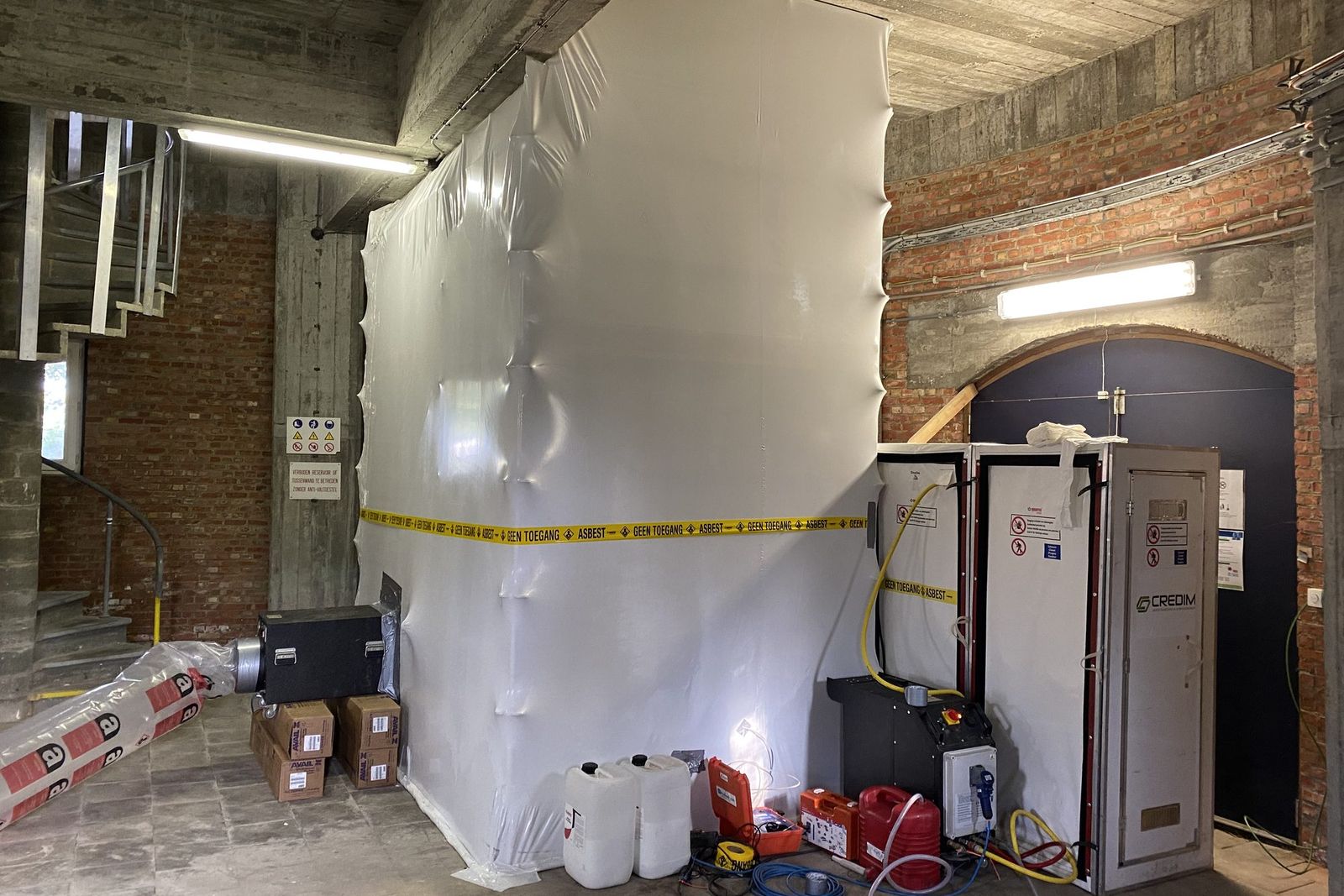
When the asbestos is damaged, glued or non-bonded, the hermetic zone comes into play. The room is completely sealed, put under negative pressure and the site is accessed via an airlock. This set-up is meant to keep the dust inside the zone, away from the rest of your home. This is the heaviest technique, but also the only correct one for, for example, an old boiler with asbestos insulation or a damaged vinyl floor.
A private individual may only remove bonded, undamaged asbestos up to 35 m² themselves, and only if it is screwed. Glued or nailed panels, damaged material and all non-bonded applications are reserved for a licensed asbestos removal contractor. They have the proper training, equipment and disposal channels.
At Credim, we assess every situation on a case-by-case basis. During a site visit, we look at the material, its condition and the surroundings. Sometimes a simple handling is sufficient, sometimes the room must be hermetically sealed. We calmly explain why and how we will proceed. For pipe insulation or an asbestos vinyl floor, we plan the right technique.
It is not always easy to assess yourself whether asbestos is bonded, let alone whether it is damaged. A visual check often provides much clarity, but you only get certainty after a sample analysis. In doubt? Request a free site visit. We will come and look, give you honest advice and a clear quote. That way you know exactly where you stand.
A licensed expert visits, assesses the situation and gives you a clear, no-obligation proposal.