White, crumbly insulation around old heating pipes is often asbestos. We remove it safely and in accordance with regulations.
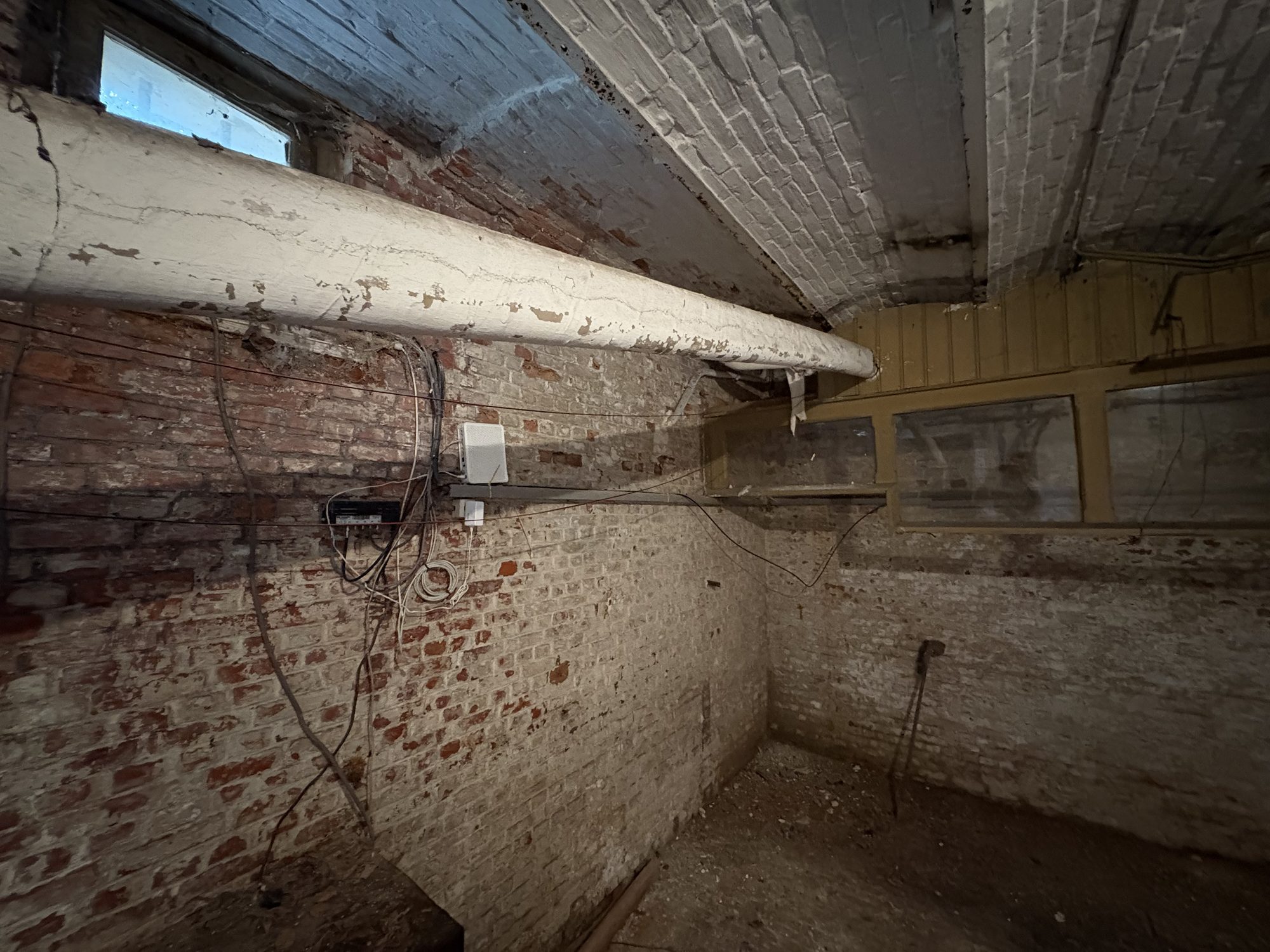
If you have a house dating from before the 1980s, there is a good chance that the heating pipes in the cellar were once insulated with asbestos. It looks like a white or grey plaster layer, often still wrapped in a rough white cloth. Many people think it is just plaster. Yet in most cases it is asbestos-containing material, and of the most dangerous kind: non-bonded asbestos.
As long as that layer remains intact and you don't touch it, the risk is limited. But during a renovation, a leak, or simply because you want to replace the pipes, dust is released. And you don't want to inhale that dust. That is why it is important to have asbestos pipe insulation removed by a licensed company. Doing it yourself is not an option, and that has everything to do with the nature of the material.
Asbestos occurs in two main forms: bonded and non-bonded. Bonded asbestos is firmly embedded in, for example, cement sheets or corrugated sheets. Fibres are only released when you start sawing or breaking it. Non-bonded asbestos is much more fragile. The fibres are loosely held in a binder that easily crumbles or disintegrates. That is precisely what makes it so dangerous: even a light touch can release fibres.
Pipe insulation around central heating pipes is such an example. This insulation was often made in the past from a mixture of asbestos and gypsum or lime. The result is a brittle, chalky layer that you can press in with your finger. To hold it all together, a layer of jute was then wrapped around it. But that jute does not protect against fibre release. On the contrary, if you pull or sand it, asbestos dust is released.
Because the material is so fragile, a strict regime applies to asbestos pipe insulation. Only a licensed asbestos removal contractor may remove it. A private individual is not allowed to tackle it, not even for a small piece. The law is clear on this: non-bonded asbestos must always be removed by a licensed company.
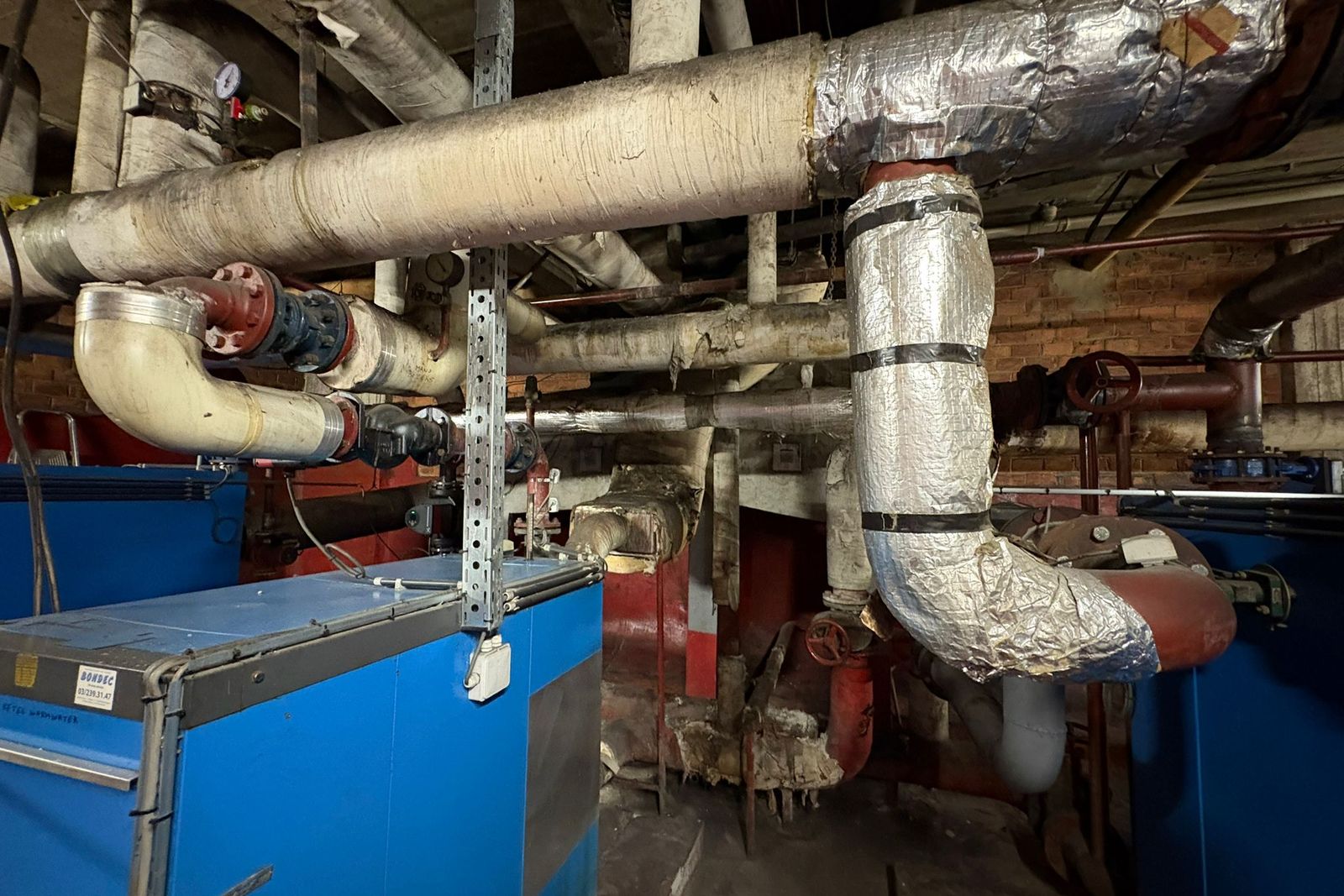
We always remove asbestos pipe insulation in your home (cellar, boiler room, attic) in a hermetic zone. We seal the room airtight with sheeting, put it under negative pressure and filter the air. Our staff wear disposable coveralls and respiratory protection. The insulation is kept wet and double-wrapped straight away. We measure the quantity in running metres of pipe, not in square metres: that is also the basis of your quote.
It is a delicate job that requires craftsmanship. Our people are trained and certified to handle asbestos safely. They work with the correct protective equipment and follow strict procedures. Afterwards, the space is checked and the asbestos is disposed of according to the regulations.
You may suspect there is asbestos around your pipes, but you are not entirely sure. That is understandable. A visual check does not always give a definitive answer. But there are a few typical characteristics. Recognising asbestos pipe insulation is done based on the structure and the location. Usually it concerns a white or grey layer that looks grainy or fibrous, around the pipes in the cellar or utility room. Sometimes there is jute around it, sometimes not. If you are in doubt, have a sample taken by a licensed asbestos expert. They can say with certainty whether it contains asbestos.
What you should definitely not do: scratch, sand or break that layer yourself. Not even to test whether it is hard or soft. That is exactly how you spread the fibres you want to avoid. Leave the material alone until a professional can assess it.
Credim is a licensed asbestos removal company that specialises in the more difficult cases. We work throughout Flanders and we will also come to your home for an inspection and a no-obligation quote. Because we deal with asbestos every day, we know exactly what to look out for. We work neatly, quickly and with respect for your home. And we arrange the disposal.
Removing asbestos pipe insulation is not a job for the do-it-yourselfer. It is a specialised operation that is best left to people who do it every day. Feel free to contact us for more information or an appointment.
An expert comes by, assesses the situation, and advises the appropriate technique.
You receive a clear, no-obligation quote.
We seal off the area and remove the asbestos according to legal regulations.
The asbestos is disposed of and processed airtight.
Certified asbestos removal company with intensively trained staff.
Hermetic zone, glovebag, and simple handling in-house.
Strict containment and air measurements protect people and the environment.
A large team with years of experience: we act quickly for your site.
A certified expert comes by, assesses the situation, and gives you a clear, no-obligation proposal.