CredimAsbestos removal & demolition
Services

Our specialities

  • Asbestos pipe insulationWhite plaster around your heating pipes
  • Asbestos vinyl floor & black glueVinyl, tiles and bitumen glue
  • Asbestos plasterPlaster on walls and ceilings
  • Asbestos roof & sheetsEternit, slates and underroof
  • What does asbestos removal cost?

More applications

  • Asbestos corrugated sheets
  • Asbestos panels
  • Asbestos flue & chimney
  • Asbestos facade
  • Asbestos underroof

Who we help

  • For homeownersRenovation or sale
  • For professionalsContractors, syndics, industry
  • Demolition works
  • Certified asbestos remover
Techniques

The three legal techniques

  • Hermetic zoneNegative pressure for damaged asbestos
  • GlovebagOnly for pipes in the open air
  • Simple handlingBonded material, low risk
  • Which technique do I need?
Info & advice

Know what's in your home

  • Recognising asbestos
  • Asbestos testing
  • Is asbestos dangerous?
  • Asbestos information

Certificate & regulations

  • Asbestos certificate (sale)
  • Certificate for common areas
  • Asbestos inventory
  • Demolition notification

Costs, grants & disposal

  • What does asbestos removal cost?
  • Grants in Flanders
  • Can I remove asbestos myself?
  • Asbestos disposal
  • Asbestos container hire

About Credim

  • About CredimCertified team from Stabroek
  • ProjectsOur work in pictures
  • ContactCall or email us
info@credim.be09 396 64 56Free site visit
CredimAsbestos removal & demolition

Certified asbestos remover for the whole of Flanders. Safe, discreet and following the legal techniques, for homeowners and professionals alike.

  • Conservenweg 6C, 2940 Stabroek
  • 09 396 64 56
  • info@credim.be

Asbestos removal

  • Asbestos pipe insulation
  • Asbestos vinyl floor
  • Asbestos plaster
  • Asbestos roof & sheets
  • Demolition works
  • For homeowners
  • For professionals

Our techniques

  • Hermetic zone
  • Glovebag
  • Simple handling
  • Which technique?

Info & advice

  • Recognising asbestos
  • Asbestos certificate
  • Asbestos disposal
  • Premie Vlaanderen
  • Asbestos info

Credim

  • About Credim
  • Projects
  • Contact
  • Free site visit

Unsure about asbestos in your home? Request a free site visit.

Free site visit

Service area: all of Flanders

  • Antwerpen
  • Gent
  • Brugge
  • Leuven
  • Mechelen
  • Aalst
  • Sint-Niklaas
  • Kortrijk
  • Hasselt
  • Genk
  • Oostende
  • Roeselare
  • Turnhout
  • Lier
  • Lokeren
  • Dendermonde
  • Beveren
  • Brasschaat
  • Vilvoorde

Information about grants, prices, deadlines and legislation is indicative and may change. Always check the current rules with the competent authorities.

© 2026 Credim BV · BE 0759.644.909

Privacy policyTerms and conditionsWebsite by Varamedia
Get in touch
  1. Credim BV
  2. Advice
  3. What is asbestos? A clear overview for Flemish homeowners
Asbestos in your home

What is asbestos? A clear overview for Flemish homeowners

Asbestos is a natural mineral that was widely used until the 1990s. Read here what it exactly is, which types exist, and why the policy aims for an asbestos-safe Flanders.
Free site visit
Request a quote
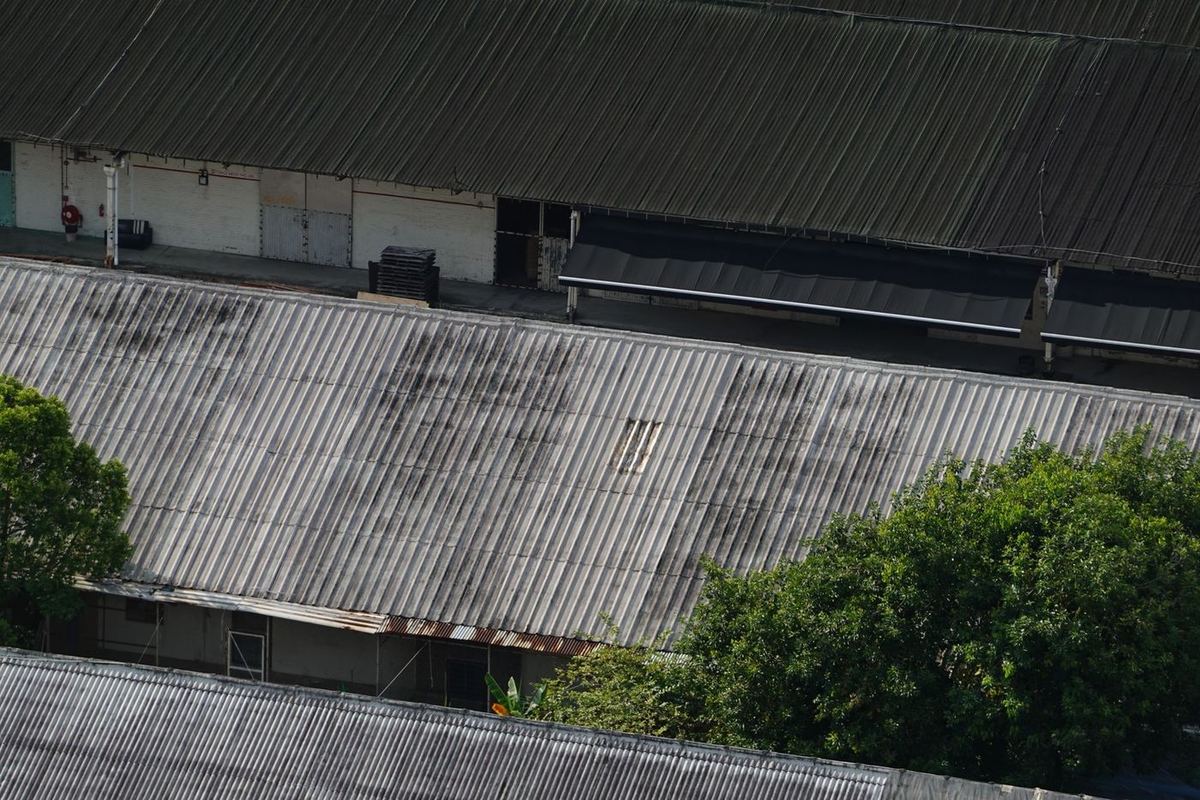
Grey corrugated warehouse roofs with dark stains, among green trees
On this page
  1. 01The three types of asbestos
  2. 02Why was asbestos used so much?
  3. 03Is asbestos dangerous?
  4. 04The policy: Asbestos-safe Flanders 2040
  5. 05What does this mean for you as a homeowner?

Asbestos is a natural mineral that was used in thousands of building materials until the late 1990s. It is strong, insulating and resistant to fire, acid and wear. That is why it was so popular in construction. But we now know that asbestos fibres are dangerous for your lungs if they are released and inhaled. That makes it important to know where asbestos is and how to handle it. On this page we explain what asbestos is, which types exist and how Flanders is working towards an asbestos-safe future.

The three types of asbestos

Asbestos is divided into three categories, based on how the fibres are bound in the material. This classification also determines how great the risk is and which removal technique is needed.

Bonded asbestos

In bonded asbestos, the fibres are firmly embedded in a hard binder, such as cement. Think of corrugated roof sheets, cladding panels, flower pots or sewer pipes. As long as the material is undamaged, hardly any fibres are released. It is the most common type of asbestos in homes.

Friable asbestos

In friable asbestos, the fibres are loose or weakly bound. Think of pipe insulation around central heating pipes, sprayed asbestos on steel structures or cords in a stove. This material is crumbly and releases fibres quickly. It is therefore the most dangerous and may only be handled by a licensed removal contractor.

Semi-bound asbestos

Semi-bound asbestos falls between the other two. The fibres are bound, but less firmly than in cement-bound materials. Examples include some vinyl floors and bituminous roof tiles. Caution is also required here, especially if the material is damaged or weathered.

Would you like to know how to recognise asbestos in your home? Then take a look at our page on recognising asbestos.
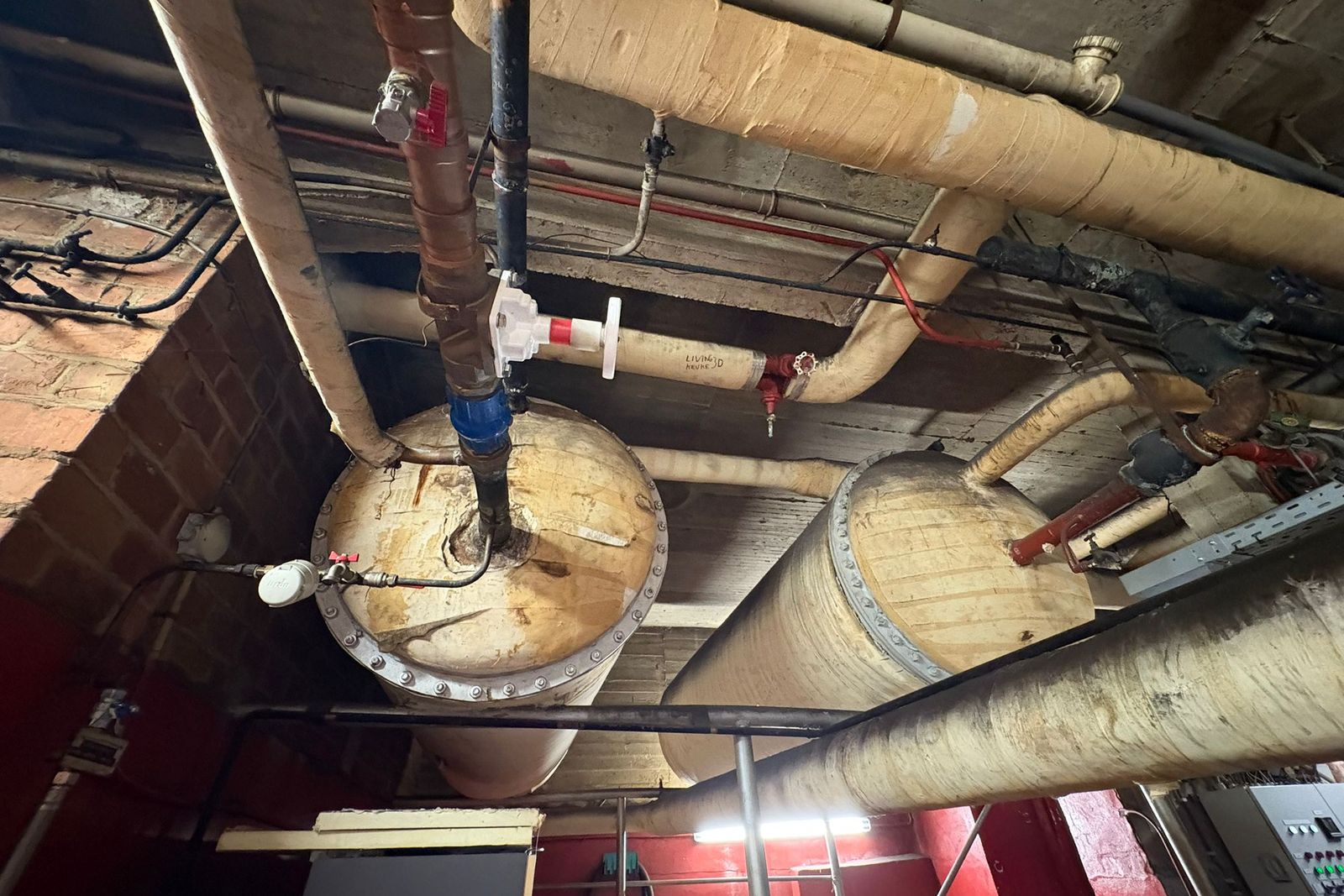
Pipes and two cylindrical vessels with insulation under a ceiling, seen from below
Photo: Credim

Why was asbestos used so much?

Asbestos was the wonder material of the 20th century. It is fire-resistant, sound-insulating, strong and cheap. It was therefore used everywhere: in roofs, facades, floors, insulation, brake linings, you name it. In Flanders, asbestos is therefore present in a large proportion of homes built before 2001. So it is not unusual to come across it during a renovation or when buying an older home.

Is asbestos dangerous?

As long as asbestos remains intact, the risk is limited. It only becomes dangerous when the fibres are released, for example through breaking, sawing, sanding or burning. These fibres are microscopically small and can cause lung diseases when inhaled. It is therefore important to treat asbestos with respect. More information about the health risks can be found on the page about the dangers of asbestos.

The policy: Asbestos-safe Flanders 2040

Flanders wants to make all buildings from before 2001 asbestos-safe by 2040. This is set out in the Asbestos Reduction Action Plan. The aim is to significantly reduce exposure to asbestos fibres and thus prevent health damage. The plan first focuses on the most high-risk applications, such as asbestos roofs and friable asbestos in poor condition. In addition, there is the asbestos certificate, which has been mandatory since 23 November 2022 when selling a home or building built before 2001. By 2032, every owner of such a building must have a certificate. For co-owned properties, an earlier deadline applies: the common parts must have a certificate by 31 December 2026 at the latest.

That certificate is drawn up by a certified asbestos expert and issued by OVAM. It is therefore not something that a contractor or asbestos removal company may draw up themselves. As an asbestos removal company, we do carry out what the certificate recommends.

What does this mean for you as a homeowner?

Do you have a home built before 2001? Then there is a good chance that asbestos is present somewhere. That does not have to be an immediate problem, as long as the material is in good condition and you do not disturb it. But during a renovation, a roof replacement or a sale, you will need to deal with it. The regulations require you to have asbestos removed correctly, and that is not always something you can do yourself.

A private individual may only remove bonded, undamaged asbestos up to 35 square metres themselves, and only if it is screwed (not glued or nailed) and after a demolition notification via the Environmental Counter. All other asbestos applications, such as friable material or damaged sheets, must be removed by a licensed company.

Are you unsure whether there is asbestos in your home? Or do you know for sure and want to have it removed? Then contact a licensed asbestos removal company such as Credim. We work throughout Flanders and master all legal techniques to remove asbestos safely.

Good to know

An asbestos certificate is not the same as an asbestos inventory. The certificate is drawn up by a certified asbestos expert and issued by OVAM. A licensed removal company carries out the remediation.

Frequently asked questions

What is asbestos?
Asbestos is a natural mineral with strong insulating and fire-resistant properties. It was widely used in building materials until the late 1990s, but is now banned because the fibres are hazardous to health.
What types of asbestos are there?
There are three categories: bonded asbestos (fibres embedded in a hard binder, such as cement), non-bonded asbestos (loose fibres, such as pipe insulation) and semi-bonded asbestos (an intermediate form, such as some vinyl floors).
Is asbestos always dangerous?
As long as asbestos is undamaged and you don't touch it, the risk is limited. Danger arises when fibres are released, for example by breaking, sawing or sanding. That's why damaged or friable asbestos should always be removed by a licensed company.

Also interesting

  • Recognising asbestos
  • Is asbestos dangerous?
  • Which technique do I need?
  • Asbestos removal
No obligation and free

Unsure about asbestos? Request a free site visit.

A certified expert visits, assesses the situation and gives you a clear, no-obligation proposal.

  • Free site visit
  • Licensed & insured
  • Fast and discreet
Free site visitCall 09 396 64 56
What is the goal of Asbestos-safe Flanders 2040?
Flanders wants to make all buildings from before 2001 asbestos-safe by 2040. The Asbestos Reduction Action Plan first targets the most high-risk applications, such as asbestos roofs and non-bonded asbestos in poor condition.
Can I remove asbestos myself?
A private individual may only remove bonded, undamaged asbestos up to 35 m² themselves, and only if it is screwed (not glued or nailed) and after a demolition notification via the Environment Counter. All other asbestos applications must be removed by a licensed removal company.