CredimAsbestos removal & demolition
Services

Our specialities

  • Asbestos pipe insulationWhite plaster around your heating pipes
  • Asbestos vinyl floor & black glueVinyl, tiles and bitumen glue
  • Asbestos plasterPlaster on walls and ceilings
  • Asbestos roof & sheetsEternit, slates and underroof
  • What does asbestos removal cost?

More applications

  • Asbestos corrugated sheets
  • Asbestos panels
  • Asbestos flue & chimney
  • Asbestos facade
  • Asbestos underroof

Who we help

  • For homeownersRenovation or sale
  • For professionalsContractors, syndics, industry
  • Demolition works
  • Certified asbestos remover
Techniques

The three legal techniques

  • Hermetic zoneNegative pressure for damaged asbestos
  • GlovebagOnly for pipes in the open air
  • Simple handlingBonded material, low risk
  • Which technique do I need?
Info & advice

Know what's in your home

  • Recognising asbestos
  • Asbestos testing
  • Is asbestos dangerous?
  • Asbestos information

Certificate & regulations

  • Asbestos certificate (sale)
  • Certificate for common areas
  • Asbestos inventory
  • Demolition notification

Costs, grants & disposal

  • What does asbestos removal cost?
  • Grants in Flanders
  • Can I remove asbestos myself?
  • Asbestos disposal
  • Asbestos container hire

About Credim

  • About CredimCertified team from Stabroek
  • ProjectsOur work in pictures
  • ContactCall or email us
info@credim.be09 396 64 56Free site visit
CredimAsbestos removal & demolition

Certified asbestos remover for the whole of Flanders. Safe, discreet and following the legal techniques, for homeowners and professionals alike.

  • Conservenweg 6C, 2940 Stabroek
  • 09 396 64 56
  • info@credim.be

Asbestos removal

  • Asbestos pipe insulation
  • Asbestos vinyl floor
  • Asbestos plaster
  • Asbestos roof & sheets
  • Demolition works
  • For homeowners
  • For professionals

Our techniques

  • Hermetic zone
  • Glovebag
  • Simple handling
  • Which technique?

Info & advice

  • Recognising asbestos
  • Asbestos certificate
  • Asbestos disposal
  • Premie Vlaanderen
  • Asbestos info

Credim

  • About Credim
  • Projects
  • Contact
  • Free site visit

Unsure about asbestos in your home? Request a free site visit.

Free site visit

Service area: all of Flanders

  • Antwerpen
  • Gent
  • Brugge
  • Leuven
  • Mechelen
  • Aalst
  • Sint-Niklaas
  • Kortrijk
  • Hasselt
  • Genk
  • Oostende
  • Roeselare
  • Turnhout
  • Lier
  • Lokeren
  • Dendermonde
  • Beveren
  • Brasschaat
  • Vilvoorde

Information about grants, prices, deadlines and legislation is indicative and may change. Always check the current rules with the competent authorities.

© 2026 Credim BV · BE 0759.644.909

Privacy policyTerms and conditionsWebsite by Varamedia
Get in touch
  1. Credim BV
  2. Advice
  3. Demolition notification and demolition follow-up plan: when and how?
Demolition & asbestos

Demolition notification and demolition follow-up plan: when and how?

A demolition notification is often mandatory, and even those who remove asbestos themselves cannot avoid it. We explain when you need a notification or a demolition follow-up plan.
Free site visit
Request a quote
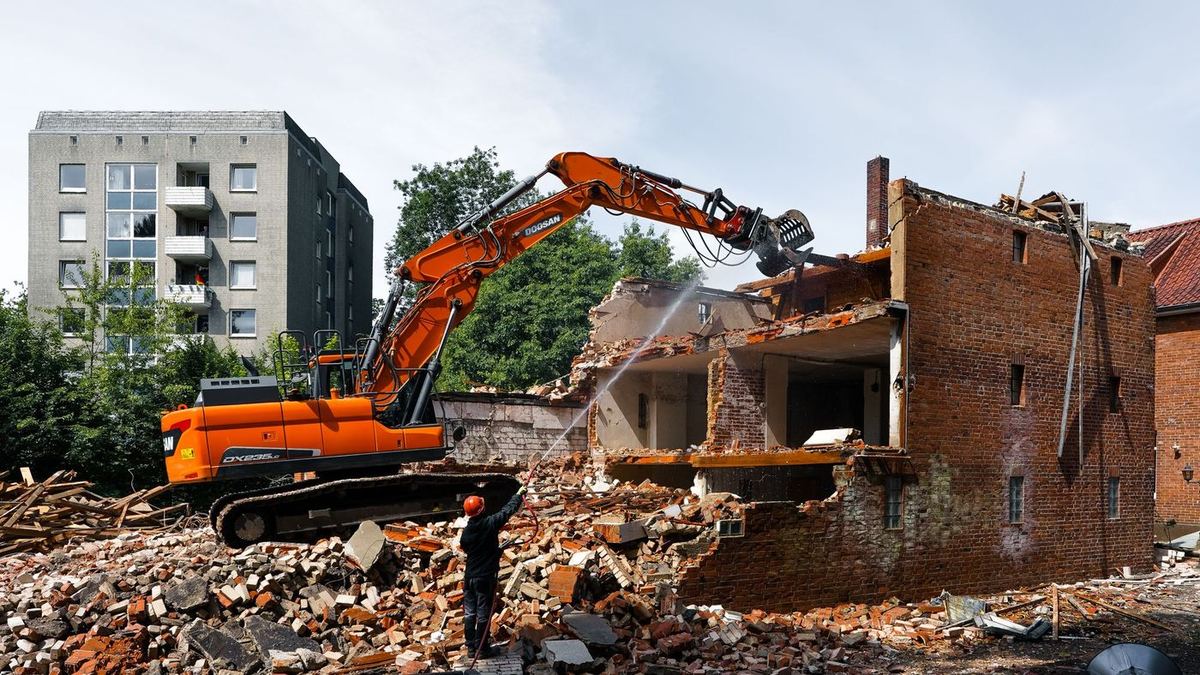
Excavator demolishing a brick building while it is sprayed with a jet of water
On this page
  1. 01The demolition notification via the Omgevingsloket
  2. 02When is a demolition follow-up plan mandatory?
  3. 03What does this mean for your project?

If you are demolishing a wall, replacing a roof or having an entire home razed, in Flanders you have to take two administrative obligations into account: the demolition notification and the demolition follow-up plan. Sounds complicated, but it is not too bad if you know when what applies. And whether you do it yourself or hire a contractor, it is important to arrange this in advance.

The demolition notification via the Omgevingsloket

Whether you need a simple notification or a full environmental permit for a demolition depends on exactly what you are demolishing and whether reconstruction is planned. For the complete demolition of a building, an environmental permit is usually required; for more limited interventions, a notification sometimes suffices. Check the exact rules with your municipality or via the Omgevingsloket, as they vary from case to case.

Anyone who wants to remove asbestos themselves follows these rules too. A private individual may only remove bonded, undamaged asbestos up to 35 m² themselves; above that limit, or for glued or nailed material, a certified removal company is mandatory. Even for a small job, such as unscrewing a corrugated sheet roof from a garden shed, you must work safely and dispose of the waste correctly via the recycling centre or a kerbside collection. If in doubt about whether you need to notify anything, check with your municipality.
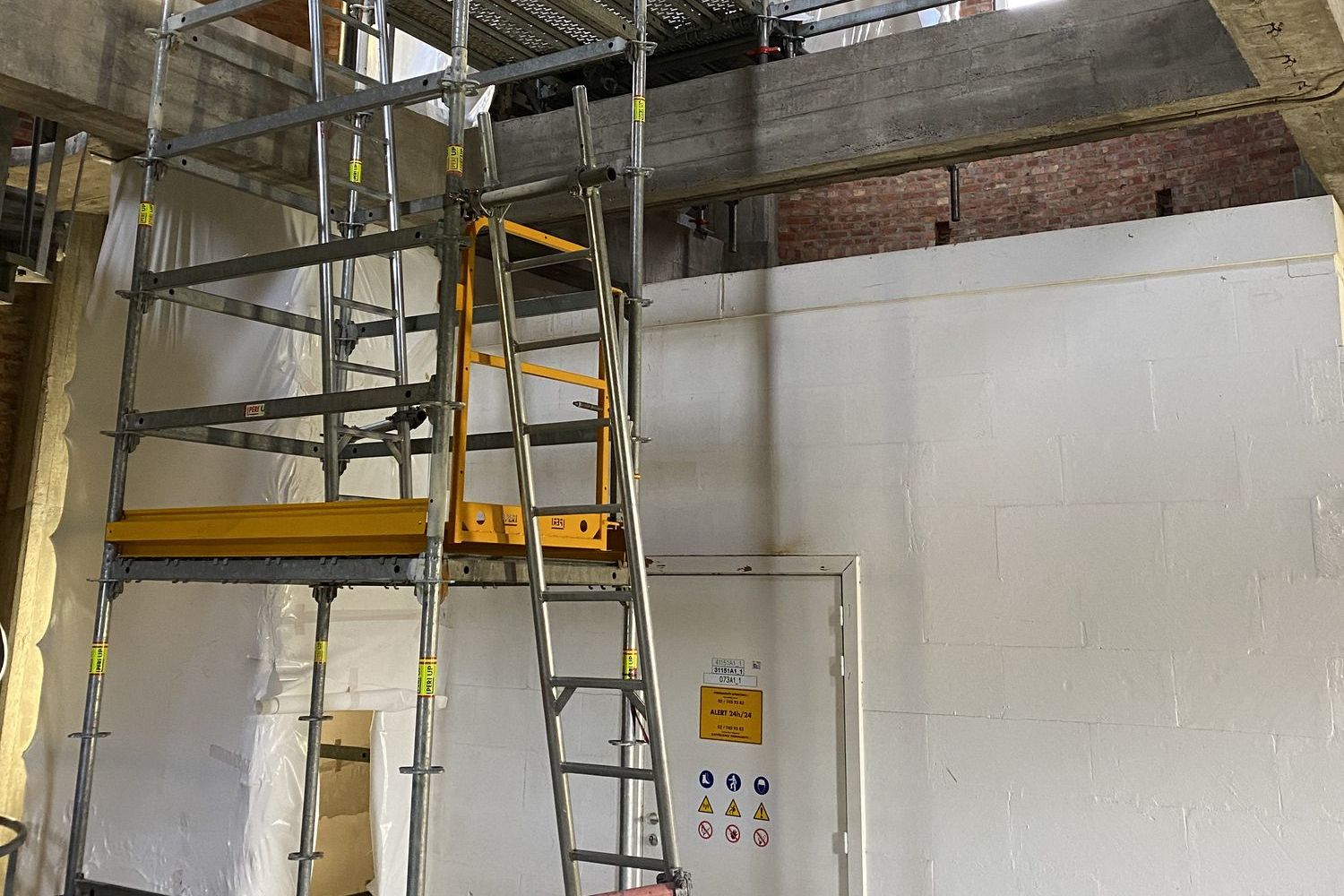
Scaffold with a ladder in a hermetic zone in an industrial building, partly lined with white sheeting
Photo: Credim

When is a demolition follow-up plan mandatory?

A demolition follow-up plan, also called SOP, is a step further. This plan is mandatory for permit-required demolition of non-residential buildings with a building volume of more than 1,000 m³, of mainly residential buildings (excluding single-family homes) of more than 5,000 m³, and for infrastructure works that release more than 250 m³ of rubble. The aim is to reuse materials and separate waste correctly. Anyone who needs such a plan has it drawn up by an expert and declared compliant via Tracimat.

In practice, an SOP mainly occurs with larger projects: completely demolishing a business hall, an apartment building making way for new construction, or an old farmhouse being converted into multiple homes. For a private individual renovating their living room, it is usually not relevant. But it is something to keep in mind if you buy a large property and plan to renovate extensively.

A demolition follow-up plan is not the same as an asbestos inventory, but they are related. The SOP states, among other things, how much asbestos is present in the building and how it must be removed. That information comes from an asbestos inventory drawn up by a certified expert. For larger demolition works, that inventory is therefore part of the plan.

What does this mean for your project?

Whether you have a contractor demolish or remove a piece of asbestos yourself, the regulations are there to prevent unsafe working and materials simply disappearing. It is not always clear whether you need to file a notification or draw up an entire plan. A good rule of thumb: if in doubt, ask your municipality or a specialised company such as Credim for demolition and dismantling works. They know the procedures and can help you on your way.

It is also important for companies and contractors to know the rules. Anyone who demolishes professionally or removes asbestos must comply with the same notification obligations, but often also has to deal with the demolition follow-up plan. You can read more about this on our page about asbestos removal for professionals.

Removing asbestos yourself is therefore allowed, but only within the limits of the law. We are happy to explain how to safely remove asbestos yourself, and when it is better to hire a certified company. This way you know exactly where you stand.

Good to know

A demolition notification is also mandatory for those who remove up to 35 m² of bonded asbestos themselves. Do this at least 30 days in advance via the Omgevingsloket.

Frequently asked questions

Is a demolition notification always mandatory?
Not always. Whether you need a notification or an environmental permit depends on what you are demolishing and whether reconstruction follows. For the complete demolition of a building, an environmental permit is usually required; for limited interventions, a notification sometimes suffices. As soon as asbestos is involved, additional rules apply anyway. Check the exact rules with your municipality or via the Omgevingsloket.
What is the difference between a demolition notification and a demolition follow-up plan?
A demolition notification or environmental permit is the administrative authorisation you arrange via the Omgevingsloket. A demolition follow-up plan is a more extensive document that is mandatory for larger, permit-required demolition: non-residential buildings of more than 1,000 m³, mainly residential buildings (excluding single-family homes) of more than 5,000 m³, or infrastructure works releasing more than 250 m³ of rubble. The plan is drawn up by an expert, declared compliant via Tracimat and includes, among other things, the data from the asbestos inventory.

Also interesting

  • Demolition and dismantling works
  • Asbestos inventory
  • Asbestos removal for professionals
No-obligation and free

In doubt about asbestos? Request a free site visit.

A certified expert comes by, assesses the situation and gives you a clear, no-obligation proposal.

  • Free site visit
  • Certified & insured
  • Fast and discreet
Free site visitCall 09 396 64 56
Can I remove asbestos myself?
As a private individual, you may remove bonded, undamaged asbestos up to 35 m² yourself, provided you follow the safety rules and dispose of the waste correctly via the recycling centre or a kerbside collection. Above that limit, or for glued or nailed material, a certified removal company is mandatory. If in doubt about whether you need to notify anything before your works, check with your municipality.
Who must draw up a demolition follow-up plan?
A demolition follow-up plan is required for permit-required demolition of non-residential buildings of more than 1,000 m³, of mainly residential buildings (excluding single-family homes) of more than 5,000 m³, and for infrastructure works releasing more than 250 m³ of rubble. In practice, this concerns larger projects such as commercial buildings or apartment blocks. A private individual renovating an ordinary home usually does not need one.
Where can I submit a demolition notification?
You submit a demolition notification or environmental permit via the Omgevingsloket, the online environment of the Flemish government. You need an e-ID or a secure app for this. Make sure you have all the details at hand, such as the nature of the works and the surface area of the structure. If in doubt, you can contact your municipality or a specialised company such as Credim.