Black bituminous adhesive and asbestos under old vinyl floors: how to spot them and why it's better not to sand them yourself.
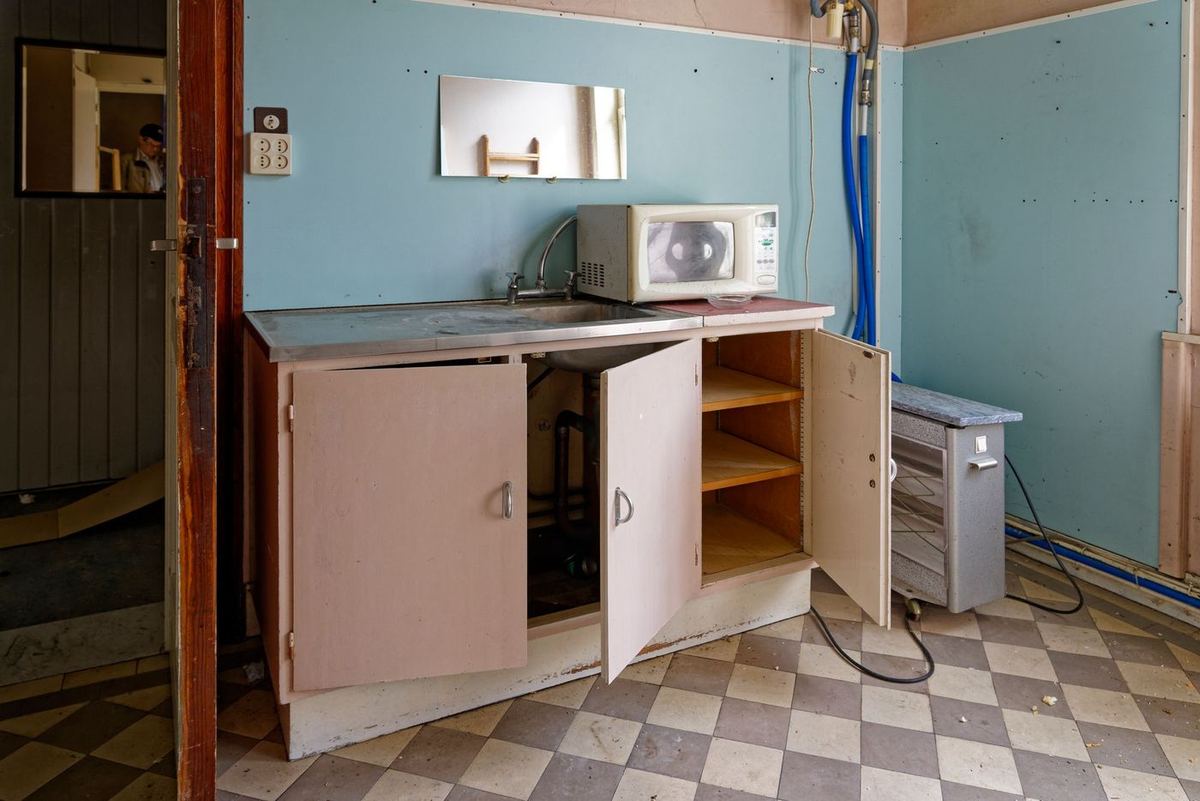
If you buy an old house from the 1960s or 1970s, you often find a worn vinyl floor in the kitchen or utility room. Underneath it, there is sometimes a black, tarry layer that at first glance just looks like old adhesive. In many cases that is indeed what it is, but that layer may contain asbestos. And the backing of the vinyl itself is not always harmless either. You need to know something about this before you start with a scraper or sander.
The black adhesive we are talking about is called bituminous cutback adhesive. It was widely used between 1955 and 1985 to bond vinyl sheets and vinyl tiles to concrete or wood. Bituminous adhesive is naturally dark and tough, but over the years it hardens and becomes brittle. That brittleness is exactly the problem: once that layer cracks or flakes, fibres can be released if it contains asbestos.
Asbestos used to be added to everything, including adhesives and floor coverings. Vinyl itself often had a backing of paper or felt with asbestos fibres to make it fire-resistant and strong. In the black adhesive, asbestos was used to strengthen the bitumen. The problem is that you cannot tell from the outside whether it contains asbestos. Both the adhesive and the vinyl can look like they contain asbestos, but they may not. A sample analysis by an accredited laboratory will give you a definitive answer, but you can already deduce a lot from the construction period and the condition of the floor.
You are looking at a black, shiny or matt layer under your old vinyl. Sometimes a piece of the sheet is still on top, sometimes it has already been removed and you only see the adhesive on the screed. Typically, the adhesive is tough and dark, but after decades it can dry out and flake. If you rub your finger over the layer and black powder sticks to your skin, then that layer is brittle. Then it is time to be careful.
The underside of the vinyl itself can also have a grey or white felt-like layer. That is often asbestos-containing felt. If that felt is damaged or fraying, fibres can be released. That is why it is important not to break or tear the vinyl when removing it.
With asbestos, it is always about fibres that can get stuck in the lungs. As long as asbestos material is intact and left alone, there is little risk. But as soon as you start sanding, scraping or breaking it, fibres are released. They are invisible and remain in the air for a long time. You breathe them in without noticing. The brittle black adhesive is especially treacherous because it crumbles quickly. A scraper that you slide under the vinyl can cause the adhesive to crack, and that is exactly what you want to avoid.
There is also the legislation. For bonded asbestos up to 35 m², you may remove it yourself as a private individual, but only if the material is undamaged and screwed, not glued. That glued floor covering therefore falls outside this. As soon as the adhesive or felt is damaged or you have to pry it loose, it is a job for an accredited asbestos removal contractor. They have the equipment and knowledge to remove the floor safely without releasing fibres.
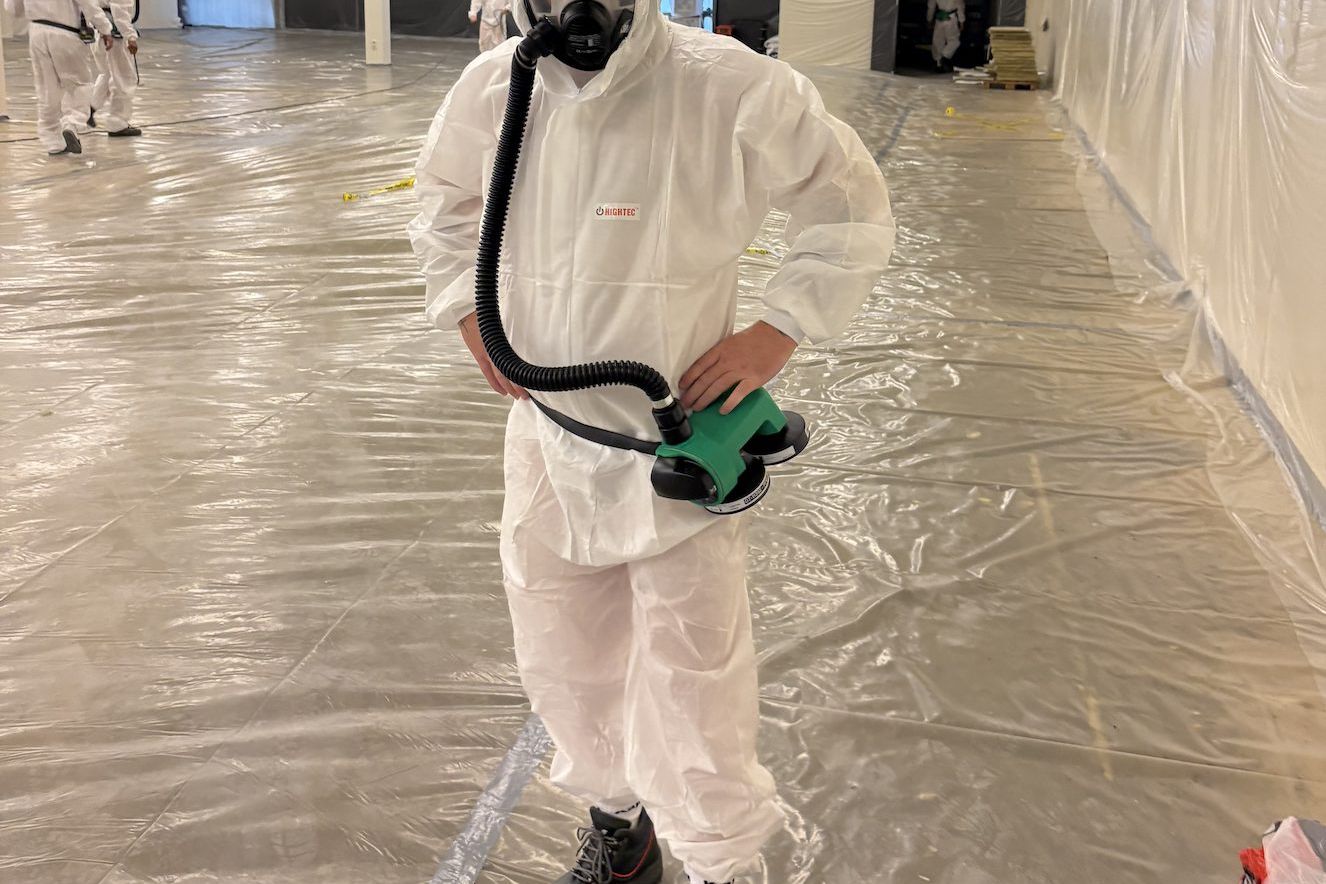
When we remove such an old vinyl floor, we do it with the right technique. In most cases, we work in a sealed zone with negative pressure. We make the room dust-tight, set up an air pressure machine and an airlock. Then we carefully remove the vinyl and the adhesive layer without breaking them. Everything goes into airtight bags and is taken to an accredited processing facility. You do not have to do anything yourself; we handle the entire process.
If you have doubts about a floor in your home, first take a calm look around. Is the vinyl still intact and has it been lying there undisturbed for years? Then there is no immediate danger. But if you are planning renovations or want to replace the floor, contact an expert. An asbestos expert can carry out an inventory and tell you whether there is asbestos in the floor. After that, we can remove it safely.
A certified expert visits, assesses the situation, and provides a clear, no-obligation proposal.