Old facade panels or slates containing asbestos? We remove them expertly and take them to a licensed processor.
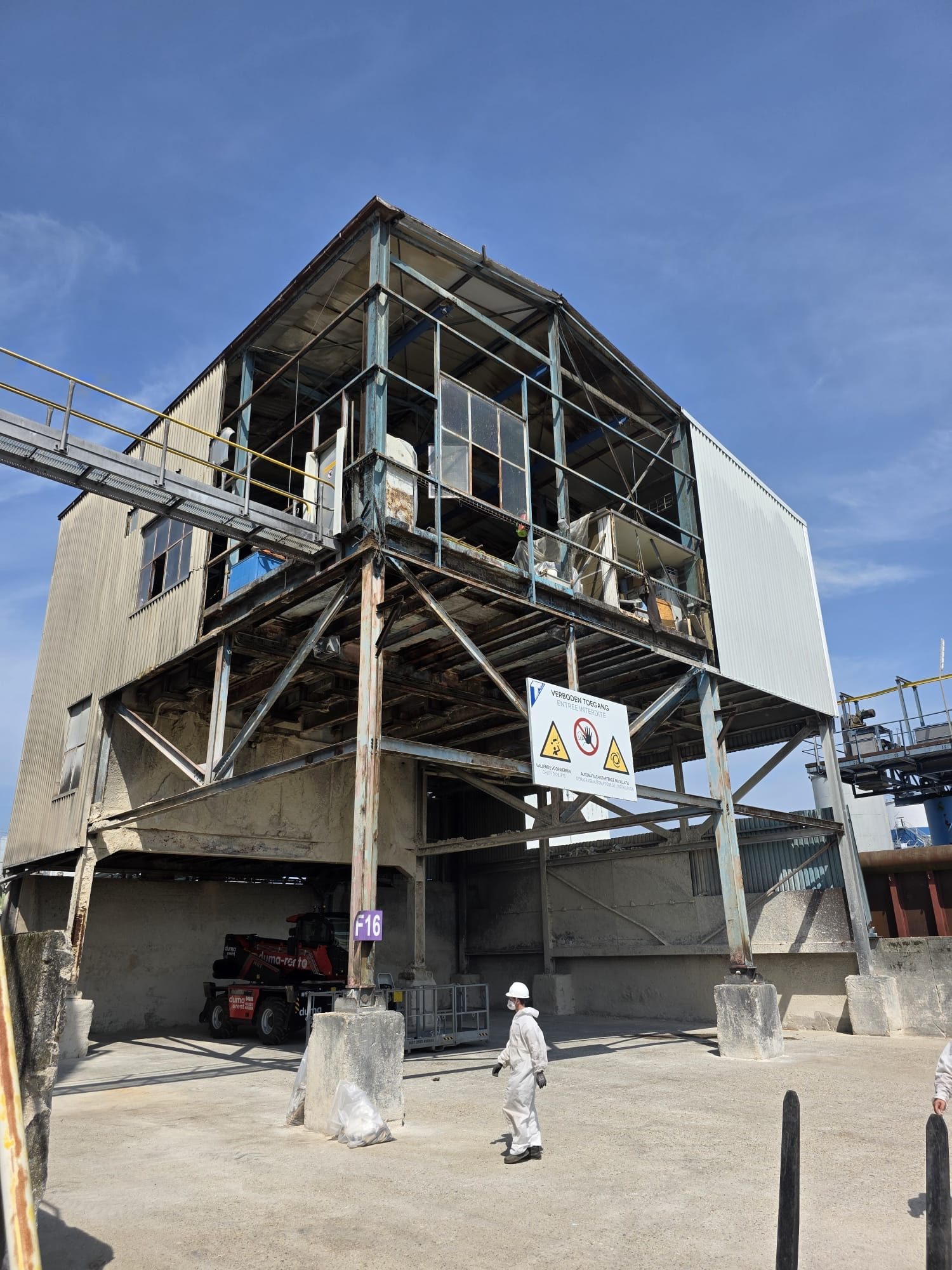
If you own a house from the 1960s or 1970s, you know them well: those grey or white cladding panels that were so popular back then. Or the slates that aren't made of slate but of fibre cement. These materials often contain asbestos. It is one of the most common applications in facades, and that's exactly why we see it on site every week.
Asbestos-containing cladding is usually firmly bonded. This means the asbestos fibres are firmly embedded in the cement. You'll find it in various forms: flat panels, corrugated sheets, or slates that overlap like roof tiles. Often the material is slightly rougher on the underside, and you can see tiny fibres if you look very closely. A brand name that often comes up is Menuiserite, but there are dozens of variants.
As long as the panels are intact and undamaged, the risk is limited. But as soon as you start drilling, sawing or breaking them, fibres are released. And that's something you want to avoid. Especially if the panels are weathered or if pieces have already crumbled off.
Many people think: I'll just unscrew those panels and take them to the recycling centre. But it's not that simple. A private individual may only remove firmly bonded asbestos up to 35 square metres themselves, and only if it is screwed, not glued or nailed, and undamaged. In addition, you must submit a demolition notification in advance via the Omgevingsloket.
In practice, asbestos cladding is often attached differently. The panels are glued, or they are so brittle that they break when pulled off. That's exactly when you need a certified removal contractor. We know the techniques and work according to the rules of the FOD WASO. The fibre concentration must stay below the standard, and we dispose of the waste correctly.
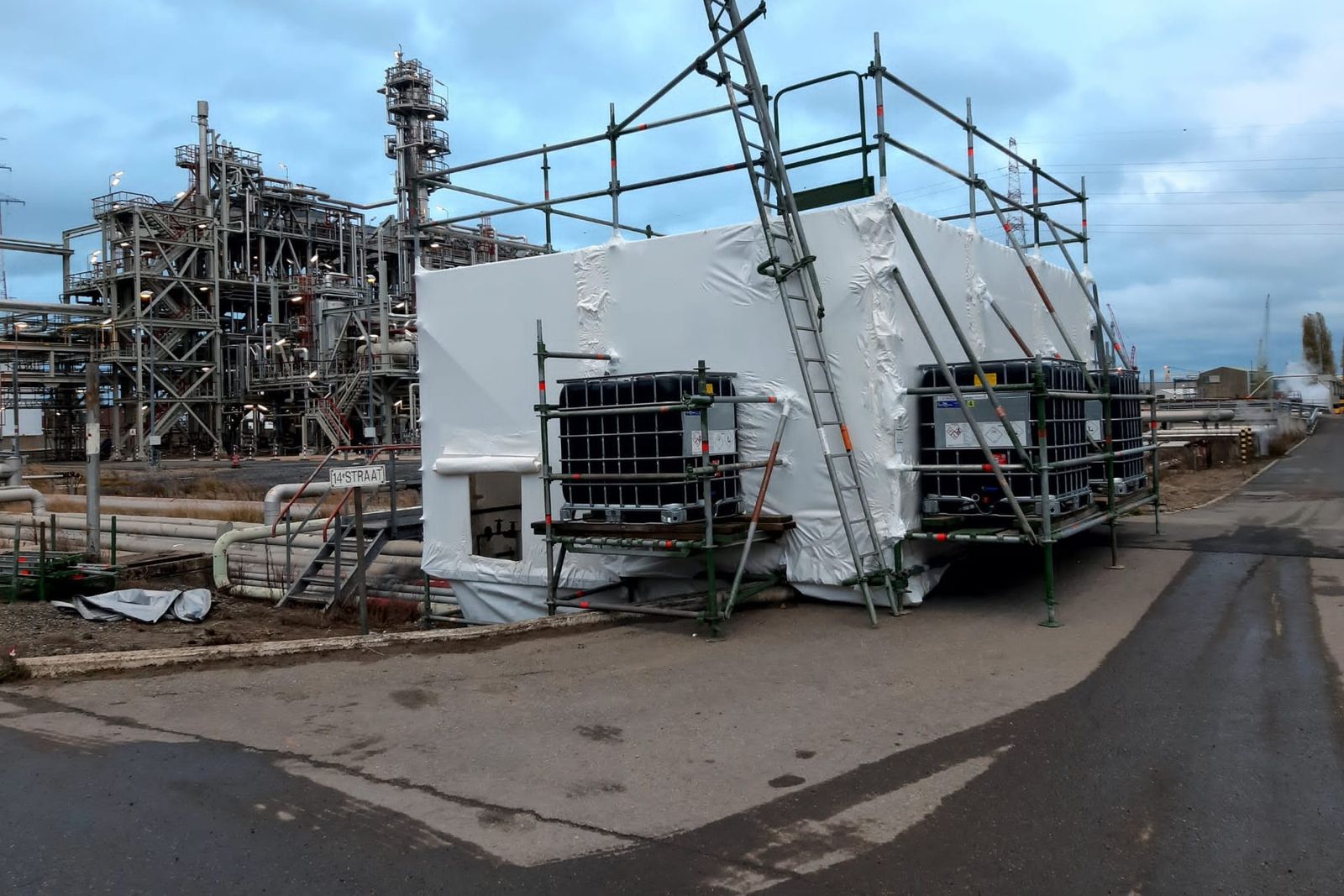
Depending on the condition of the facade, we choose one of the three legal techniques. For a facade that still looks good, a simple operation is often sufficient. This means we carefully unscrew the panels and wrap them in airtight foil. If the material is damaged or contains friable asbestos, we set up a hermetic zone with negative pressure.
The panels are wrapped on site in foil of at least 100 microns. We then transport them to a certified processing facility. You don't have to go anywhere; we handle everything. We also clean the exposed substrate so you can immediately insulate or install a new facade afterwards.
Often asbestos is not only present in the facade but also in the roof. Think of asbestos slates or corrugated sheets. In that case, it's more cost-effective to have both removed in one go. You can also make use of the asbestos removal premium in Flanders if you combine it with insulation. Check mijnverbouwpremie.be for the current conditions.
Are you dealing with asbestos panels on the facade but also in other places such as a garden shed or a canopy? Read more about removing asbestos panels and cladding. And if it also involves the roof, take a look at our page on asbestos roof removal.
We'll come by, assess the situation and give you clear advice. No empty promises, but an honest assessment of what needs to be done.
An expert visits, assesses the situation, and advises on the right technique.
You receive a clear, no-obligation quote.
We seal off the area and remove the asbestos in line with legal regulations.
The asbestos is transported and processed airtight.
Certified asbestos removal company with intensively trained staff.
Hermetic zone, glove bag, and straightforward handling in-house.
Strict containment and air monitoring protect people and the environment.
A large team with years of experience: we act quickly for your site.
A certified expert visits, assesses the situation, and gives you a clear, no-obligation proposal.
* Premium amounts, subsidy conditions and legal deadlines may change. The information on this page is indicative; always check the current rules with OVAM, your municipality or via Mijn VerbouwPremie. Last reviewed: September 2026.