Flat asbestos cement sheets are brittle and therefore treacherous. We remove them expertly.
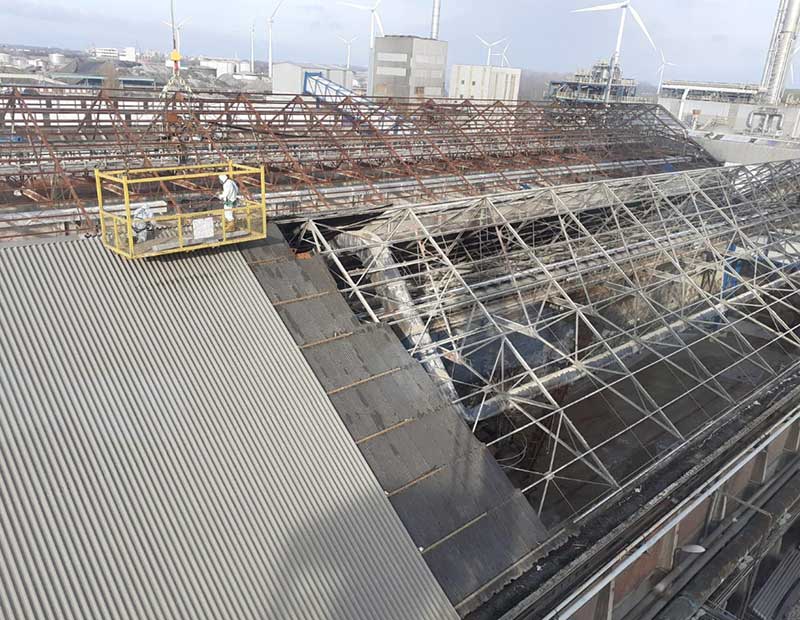
Not all asbestos in and around a home is in corrugated sheets. Flat asbestos cement sheets appear as cladding, ceiling or wall panels, chimney casings, or as sheet material in an outbuilding. They look harmless, but as soon as they break or you drill into them, fibres are released. That is why it is best not to remove them yourself, but to call in a licensed company.
In homes built before 2001, asbestos can be almost anywhere. Flat sheets were often used for exterior cladding, as interior walls in a shed or garage, or as casing around a chimney. You also regularly see them in barns and stables. Sometimes they have been painted, which makes them harder to recognise. Recognising asbestos is not always easy. If in doubt, have a sample taken by a certified asbestos expert.
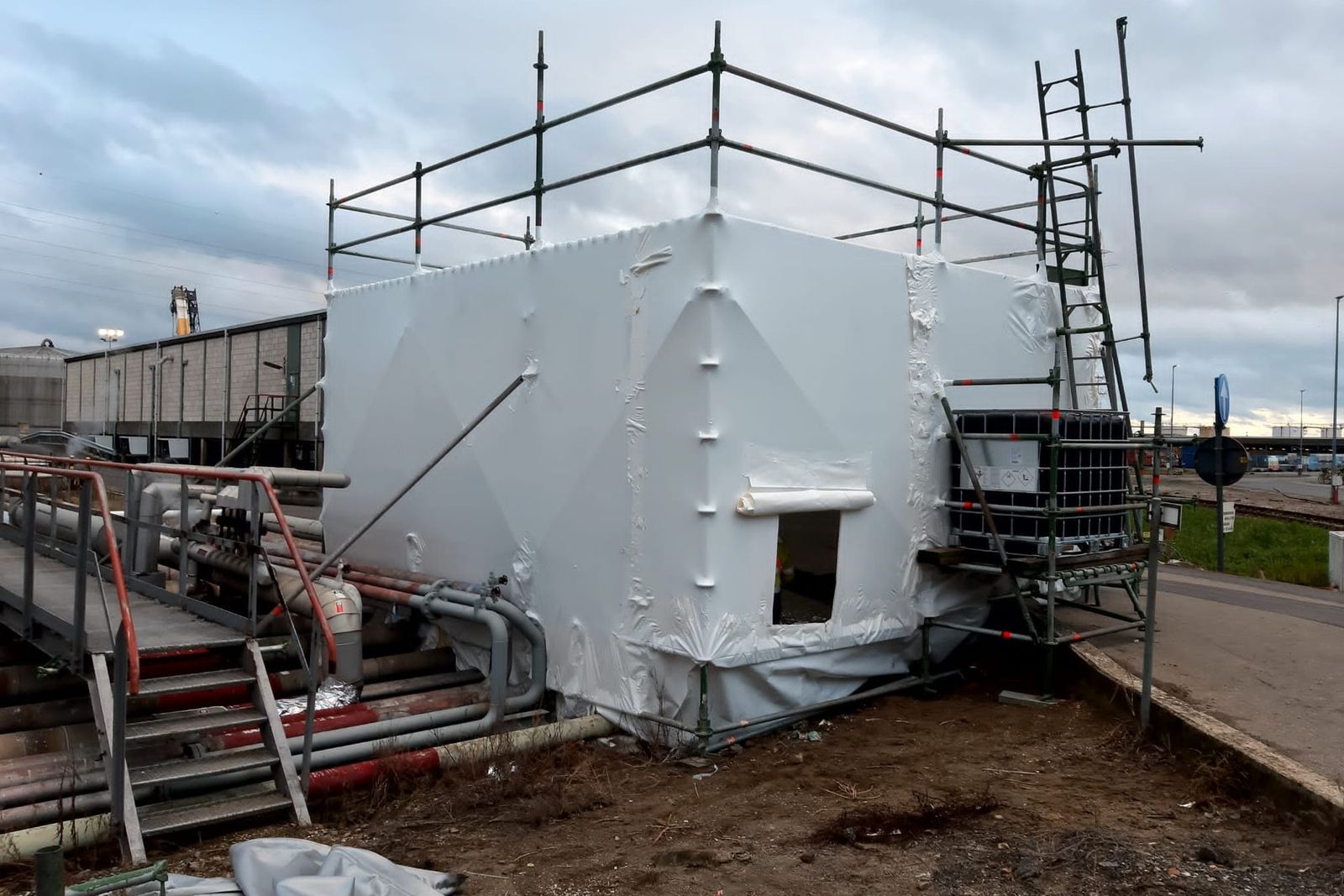
Corrugated sheets are usually sturdy and bonded, which means they may be removed as a simple operation under certain conditions. Flat sheets, however, are more brittle. Especially if they are damaged or if someone has ever drilled through them, the risk of fibre release is greater. That brittleness makes the difference. Where we can often work with a simple operation when removing asbestos corrugated sheets, with flat sheets we sometimes have to set up an airtight containment.
In Flanders, a private individual may only remove bonded, undamaged asbestos that is screwed, not glued or nailed, and up to a maximum of 35 m². You must also submit a demolition notification via the Environmental Counter. But with flat sheets, that is rarely a good idea. They break quickly, and a broken sheet is no longer a simple operation. Damaged material should always end up with a licensed removal company.
We work according to the three legally recognised techniques. For flat sheets in good condition, we often use the simple operation, but with the right precautions: we wet the material, work in a demarcated area and wrap everything airtight in foil of at least 100 microns. If the material is damaged or contains friable asbestos, we set up an airtight containment with negative pressure.
A common location is the facade. Flat asbestos sheets as cladding are very common in certain neighbourhoods from the 1960s and 1970s. If you have them removed, you should also consider the insulation behind them. If you combine this with facade insulation, you may be eligible for a grant through Mijn VerbouwPremie. You can read more about this approach on our page about removing asbestos from facades.
We arrange disposal to a licensed processing facility. You do not need to go to the recycling centre yourself. For friable asbestos, you are not even allowed to do that yourself. The asbestos certificate also remains your responsibility. That certificate is drawn up by a certified asbestos expert and issued by OVAM. We only carry out the removal indicated by the certificate.
Flat asbestos sheets are not an insurmountable problem. You just need to handle them correctly. With a targeted approach and the right technique, we make your home asbestos-safe.
An expert visits, assesses the situation and advises on the right technique.
You receive a clear, no-obligation quote.
We cordon off the area and remove the asbestos in accordance with legal regulations.
The asbestos is transported and processed airtight.
Certified asbestos removal company with intensively trained staff.
Hermetic zone, glove bag and simple handling in-house.
Strict containment and air monitoring protect people and the environment.
A large team with years of experience: we act quickly for your site.
A certified expert visits, assesses the situation and gives you a clear, no-obligation proposal.
* Premium amounts, subsidy conditions and legal deadlines may change. The information on this page is indicative; always check the current rules with OVAM, your municipality or via Mijn VerbouwPremie. Last reviewed: September 2026.