CredimAsbestos removal & demolition
Services

Our specialities

  • Asbestos pipe insulationWhite plaster around your heating pipes
  • Asbestos vinyl floor & black glueVinyl, tiles and bitumen glue
  • Asbestos plasterPlaster on walls and ceilings
  • Asbestos roof & sheetsEternit, slates and underroof
  • What does asbestos removal cost?

More applications

  • Asbestos corrugated sheets
  • Asbestos panels
  • Asbestos flue & chimney
  • Asbestos facade
  • Asbestos underroof

Who we help

  • For homeownersRenovation or sale
  • For professionalsContractors, syndics, industry
  • Demolition works
  • Certified asbestos remover
Techniques

The three legal techniques

  • Hermetic zoneNegative pressure for damaged asbestos
  • GlovebagOnly for pipes in the open air
  • Simple handlingBonded material, low risk
  • Which technique do I need?
Info & advice

Know what's in your home

  • Recognising asbestos
  • Asbestos testing
  • Is asbestos dangerous?
  • Asbestos information

Certificate & regulations

  • Asbestos certificate (sale)
  • Certificate for common areas
  • Asbestos inventory
  • Demolition notification

Costs, grants & disposal

  • What does asbestos removal cost?
  • Grants in Flanders
  • Can I remove asbestos myself?
  • Asbestos disposal
  • Asbestos container hire

About Credim

  • About CredimCertified team from Stabroek
  • ProjectsOur work in pictures
  • ContactCall or email us
info@credim.be09 396 64 56Free site visit
CredimAsbestos removal & demolition

Certified asbestos remover for the whole of Flanders. Safe, discreet and following the legal techniques, for homeowners and professionals alike.

  • Conservenweg 6C, 2940 Stabroek
  • 09 396 64 56
  • info@credim.be

Asbestos removal

  • Asbestos pipe insulation
  • Asbestos vinyl floor
  • Asbestos plaster
  • Asbestos roof & sheets
  • Demolition works
  • For homeowners
  • For professionals

Our techniques

  • Hermetic zone
  • Glovebag
  • Simple handling
  • Which technique?

Info & advice

  • Recognising asbestos
  • Asbestos certificate
  • Asbestos disposal
  • Premie Vlaanderen
  • Asbestos info

Credim

  • About Credim
  • Projects
  • Contact
  • Free site visit

Unsure about asbestos in your home? Request a free site visit.

Free site visit

Service area: all of Flanders

  • Antwerpen
  • Gent
  • Brugge
  • Leuven
  • Mechelen
  • Aalst
  • Sint-Niklaas
  • Kortrijk
  • Hasselt
  • Genk
  • Oostende
  • Roeselare
  • Turnhout
  • Lier
  • Lokeren
  • Dendermonde
  • Beveren
  • Brasschaat
  • Vilvoorde

Information about grants, prices, deadlines and legislation is indicative and may change. Always check the current rules with the competent authorities.

© 2026 Credim BV · BE 0759.644.909

Privacy policyTerms and conditionsWebsite by Varamedia
Get in touch
  1. Credim BV
  2. Removing asbestos chimney and flue
Asbestos removal

Removing asbestos chimney and flue

Do you recognise asbestos around your chimney or flue? We remove it expertly, with the right technique.
Free site visitRequest a quote
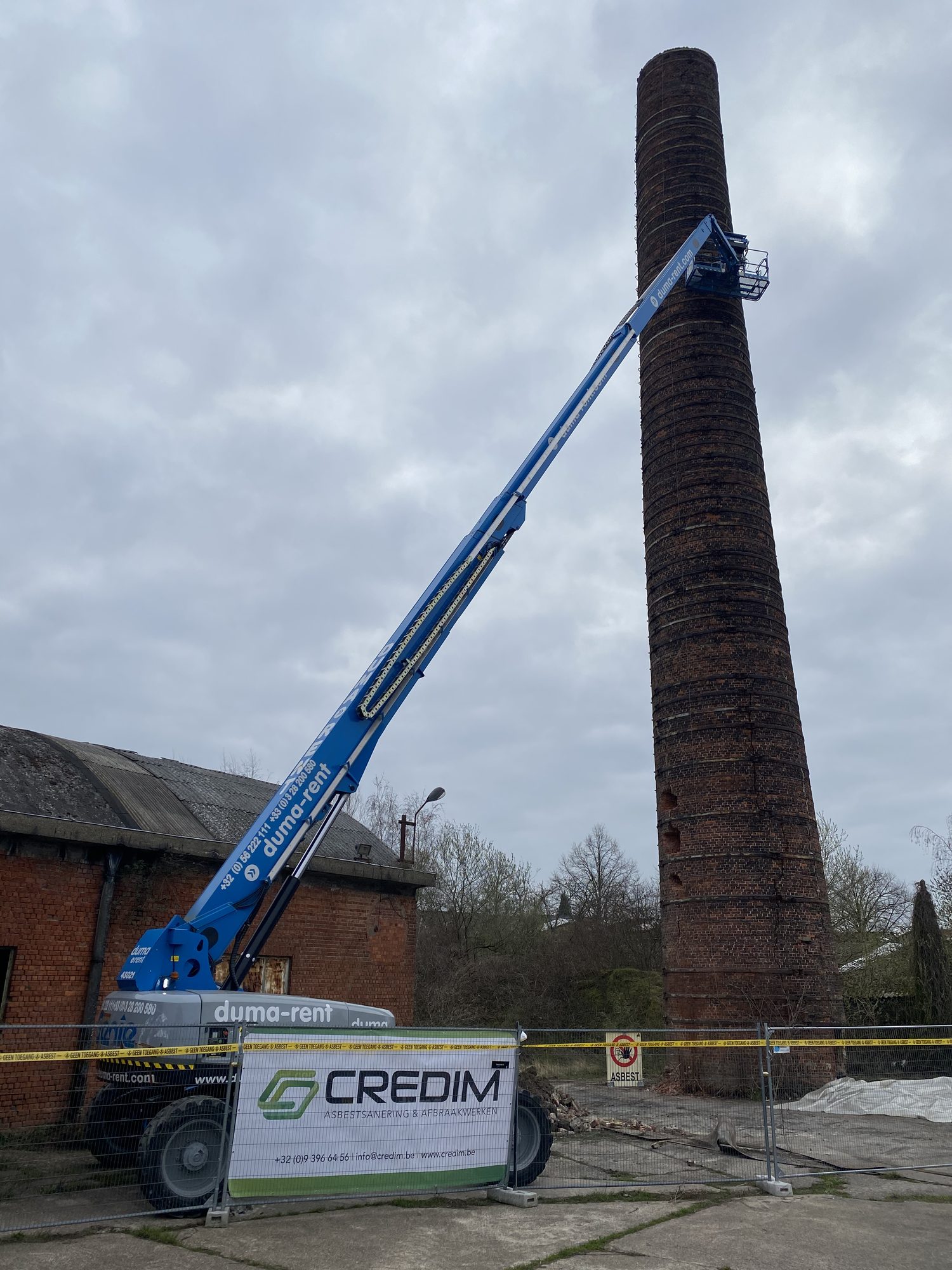
Aerial platform against a tall brick chimney during mastic removal
On this page
  1. 01Not always easy to recognise
  2. 02The difference between bonded and friable asbestos
03
The right technique for your situation
  • 04Do it yourself or outsource?
  • If you own an older house, you know them well: those thick, whitish-grey layers around the flue pipe or chimney in the cellar. They often contain asbestos, especially in homes built before the 1980s. It was used in the past as insulation against heat, but also as a finish around stovepipes and central heating pipes. As long as it is undamaged and you don't touch it, the danger is limited. But during renovation, a leak, or simply due to age, it can crumble. And then fibres are released that you'd rather not inhale.

    Not always easy to recognise

    Asbestos around a chimney is not always the same. Sometimes you see a hard, grey board, sometimes a soft, whitish mass that looks like plaster. It can also be hidden behind a decorative plate or in an old boiler room. A visual check is not enough to be sure. If you want to know before you renovate, have a sample taken by an asbestos expert. They can say with certainty whether you are dealing with asbestos. Scraping or sanding it yourself is not a good idea; it only makes things worse.
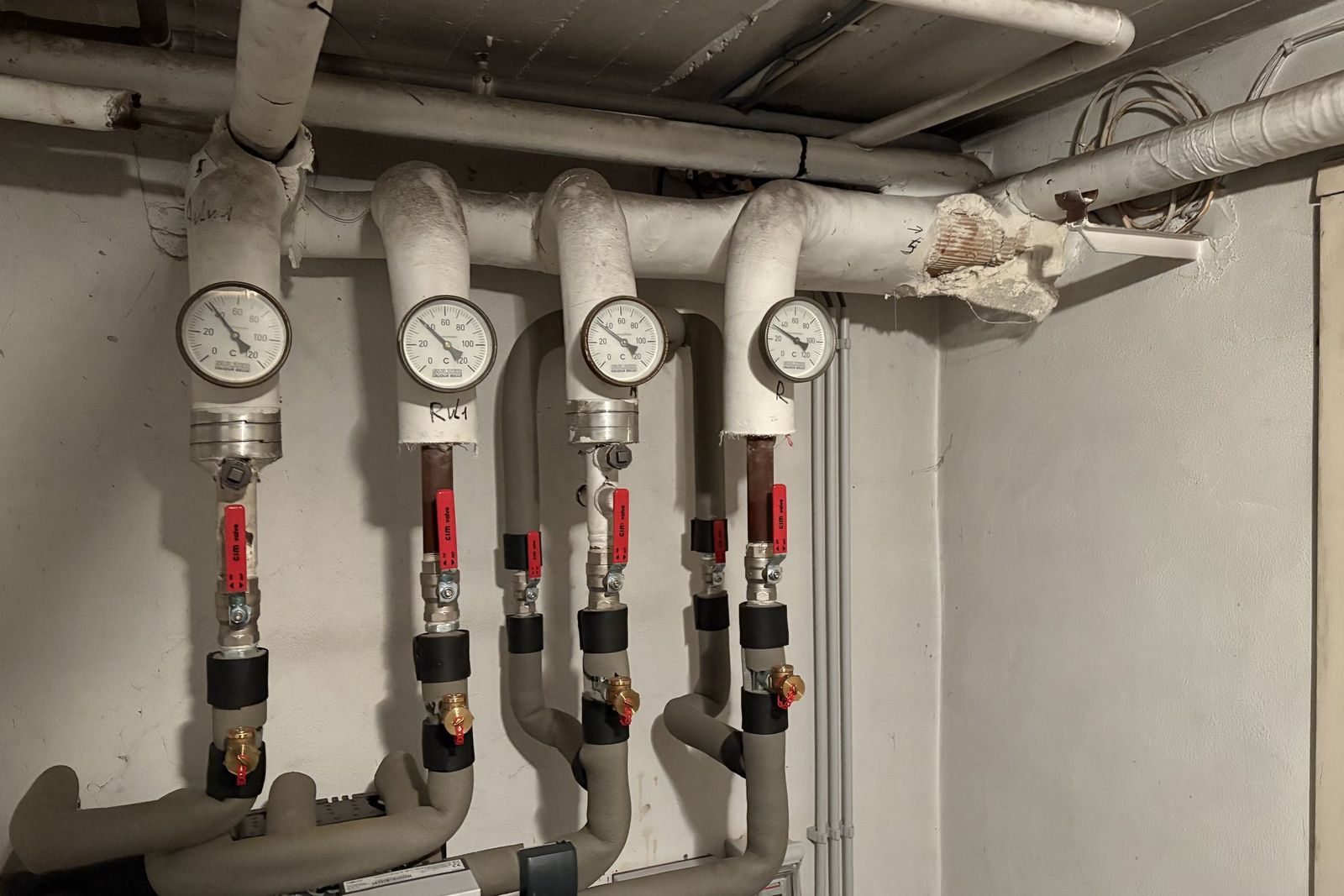
    Four pipes with thermometers and red-handled valves, with damaged pipe insulation at the top right
    Photo: Credim

    The difference between bonded and friable asbestos

    In chimneys and flues, you often encounter friable asbestos, especially in the insulation around the pipes. That material is brittle and easily releases fibres. That is precisely why you are not allowed to remove it yourself. Even bonded asbestos, such as an asbestos-cement flue pipe, must be handled with care. Anything that is damaged or where you saw, break, or drill belongs with a licensed removal contractor.

    The right technique for your situation

    Depending on what we find, we use one of the three legal techniques. If the chimney is still intact and it concerns bonded material with little risk, a simple operation may suffice. But with friable insulation or damaged pieces, we build a hermetic zone with negative pressure, to prevent fibres from escaping the zone while we remove the asbestos.

    Do it yourself or outsource?

    For a small, intact asbestos-cement board up to 35 m², you may sometimes do it yourself as a private individual, provided you submit a demolition notification. But a chimney or flue is rarely that simple. Often there is insulation around it that is friable, and then it is mandatory to hire a licensed company. Also, if you doubt whether the material is damaged, it is better to leave it to someone who does this every day. It is not only a matter of safety, but also of correct disposal. Asbestos must be packaged airtight in foil of at least 100 microns. At the recycling centre, you can only dispose of a limited amount, and you are not allowed to bring friable asbestos there at all.

    What we do on site

    When we come by, it happens in a fixed order. First, we cordon off the work area and check whether there are any other asbestos applications nearby. Then we choose the right technique, depending on what we find. We work neatly and clean up everything, including the packaging and transport to a licensed processor. Such an approach may seem obvious, but it is precisely that care that makes the difference.

    Do you have a chimney or flue that you have questions about? Then contact Credim. We are happy to look at the possibilities with you and give you clear advice, without any obligation.

    Good to know

    An asbestos certificate is drawn up by a certified asbestos expert, not by a removal company. We remove the asbestos listed on your certificate.

    How we work

    From site visit to completion

    1. 01

      Free site visit

      An expert visits, assesses the situation and advises on the right technique.

    2. 02

      Clear quote

      You receive a clear, no-obligation quote.

    3. 03

      Safe remediation

      We seal off the area and remove the asbestos in accordance with legal regulations.

    4. 04

      Removal & completion

      The asbestos is transported and processed airtight.

    Why Credim

    A certified partner for safe asbestos removal

    01

    Certified & accredited

    Certified asbestos removal company with intensively trained staff.

    02

    All three techniques

    Hermetic zone, glove bag and simple handling in-house.

    03

    Safety & prevention

    Strict containment and air measurements protect people and the environment.

    04

    Fast and flexible

    A large team with years of experience: we act quickly for your site.

    Recognised asbestos removal companyRecognised for demolition and removal works (FPS Employment)View our recognition (pdf)

    Frequently asked questions

    How do I recognise asbestos around my chimney or flue?
    Asbestos around a chimney or flue often appears as a whitish-grey, crumbly layer around the pipe, sometimes wrapped in hessian cloth. Hard grey boards can also contain asbestos. Certain identification is only possible through sampling by an asbestos expert.
    Can I remove asbestos around my chimney myself?
    Only bonded, undamaged asbestos up to 35 m² may be removed by yourself, after a demolition notification. For chimneys and flues, the insulation is often non-bonded, and then a certified removal company is mandatory.
    Which technique does Credim use for chimneys and flues?
    That depends on the situation. For non-bonded insulation, we work in a hermetic zone. For damaged or hard-to-reach asbestos, we build a hermetic zone with negative pressure.
    Do I need an asbestos certificate for my chimney?
    An asbestos certificate is mandatory when selling a house built before 2001. The certificate is drawn up by a certified asbestos expert. It may be that your chimney is listed on that certificate as an asbestos application.
    What does it cost to remove an asbestos chimney?
    The price depends on the size, the technique and the accessibility. Request a no-obligation quote from Credim for a tailored price.

    Also interesting

    • Removing asbestos pipe insulation
    • Hermetic zone
    • Recognising asbestos
    No-obligation and free

    Do you doubt asbestos? Request a free site visit.

    A certified expert visits, assesses the situation and gives you a clear, no-obligation proposal.

    • Free site visit
    • Certified & insured
    • Fast and discreet
    Free site visitCall 09 396 64 56