CredimAsbestos removal & demolition
Services

Our specialities

  • Asbestos pipe insulationWhite plaster around your heating pipes
  • Asbestos vinyl floor & black glueVinyl, tiles and bitumen glue
  • Asbestos plasterPlaster on walls and ceilings
  • Asbestos roof & sheetsEternit, slates and underroof
  • What does asbestos removal cost?

More applications

  • Asbestos corrugated sheets
  • Asbestos panels
  • Asbestos flue & chimney
  • Asbestos facade
  • Asbestos underroof

Who we help

  • For homeownersRenovation or sale
  • For professionalsContractors, syndics, industry
  • Demolition works
  • Certified asbestos remover
Techniques

The three legal techniques

  • Hermetic zoneNegative pressure for damaged asbestos
  • GlovebagOnly for pipes in the open air
  • Simple handlingBonded material, low risk
  • Which technique do I need?
Info & advice

Know what's in your home

  • Recognising asbestos
  • Asbestos testing
  • Is asbestos dangerous?
  • Asbestos information

Certificate & regulations

  • Asbestos certificate (sale)
  • Certificate for common areas
  • Asbestos inventory
  • Demolition notification

Costs, grants & disposal

  • What does asbestos removal cost?
  • Grants in Flanders
  • Can I remove asbestos myself?
  • Asbestos disposal
  • Asbestos container hire

About Credim

  • About CredimCertified team from Stabroek
  • ProjectsOur work in pictures
  • ContactCall or email us
info@credim.be09 396 64 56Free site visit
CredimAsbestos removal & demolition

Certified asbestos remover for the whole of Flanders. Safe, discreet and following the legal techniques, for homeowners and professionals alike.

  • Conservenweg 6C, 2940 Stabroek
  • 09 396 64 56
  • info@credim.be

Asbestos removal

  • Asbestos pipe insulation
  • Asbestos vinyl floor
  • Asbestos plaster
  • Asbestos roof & sheets
  • Demolition works
  • For homeowners
  • For professionals

Our techniques

  • Hermetic zone
  • Glovebag
  • Simple handling
  • Which technique?

Info & advice

  • Recognising asbestos
  • Asbestos certificate
  • Asbestos disposal
  • Premie Vlaanderen
  • Asbestos info

Credim

  • About Credim
  • Projects
  • Contact
  • Free site visit

Unsure about asbestos in your home? Request a free site visit.

Free site visit

Service area: all of Flanders

  • Antwerpen
  • Gent
  • Brugge
  • Leuven
  • Mechelen
  • Aalst
  • Sint-Niklaas
  • Kortrijk
  • Hasselt
  • Genk
  • Oostende
  • Roeselare
  • Turnhout
  • Lier
  • Lokeren
  • Dendermonde
  • Beveren
  • Brasschaat
  • Vilvoorde

Information about grants, prices, deadlines and legislation is indicative and may change. Always check the current rules with the competent authorities.

© 2026 Credim BV · BE 0759.644.909

Privacy policyTerms and conditionsWebsite by Varamedia
Get in touch
  1. Credim BV
  2. Advice
  3. Can I remove asbestos myself?
Removing asbestos yourself

Can I remove asbestos myself?

The rules at a glance, so you know when you can get to work yourself and when it's better to call in a certified company.
Free site visitRequest a quote
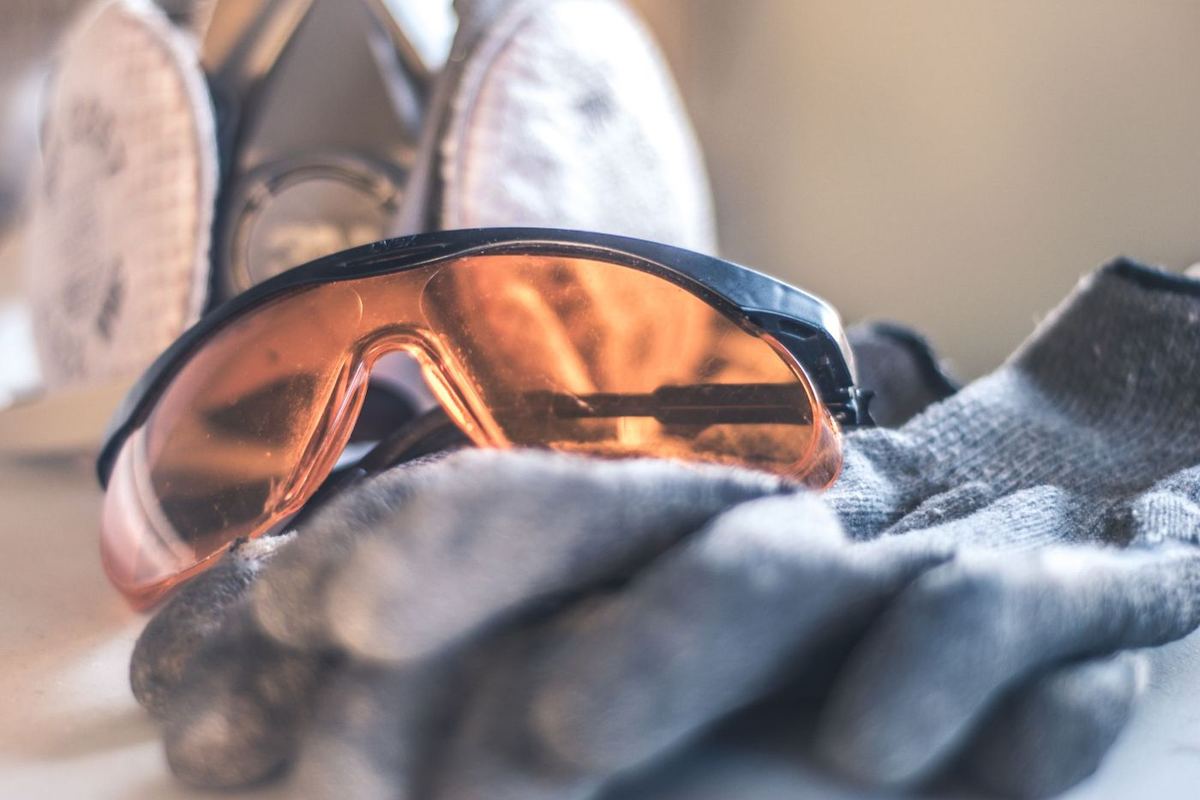
Safety glasses, work gloves and a respirator with two filters
On this page
  1. 01The core rule: bonded, undamaged and screwed
  2. 02When you absolutely must not start yourself
  3. 03Doing it yourself? These safety rules are not a suggestion
  4. 04The three techniques used by a licensed company
  5. 05Why you call a licensed company for larger or high-risk jobs
  6. 06In doubt? Let us visit you

You are about to renovate and come across a piece of asbestos. A corrugated sheet under the canopy, a piece of pipe insulation in the cellar, or an old vinyl floor in the utility room. Your first instinct may be to remove it yourself. That is possible, but only under strict conditions. This guide explains what is allowed, what is not, and why that boundary exists.

The core rule: bonded, undamaged and screwed

The law is clear. A private individual may only remove bonded asbestos that is undamaged and screwed (so not glued or nailed). Think of an asbestos corrugated sheet that is still in good condition and is screwed onto the roof of your garden shed. In addition, a maximum area of 35 m² applies. Anything larger, or that does not meet those conditions, must be done by a licensed removal contractor.

That 35 m² limit is not an arbitrary number. It is the point at which the risk of fibre release and mistakes becomes too great. You may still be able to safely unscrew a small sheet, but with a full roof of 40 m², much more is involved: the chance of breaking a sheet, spreading dust or exposing yourself to fibres increases exponentially.
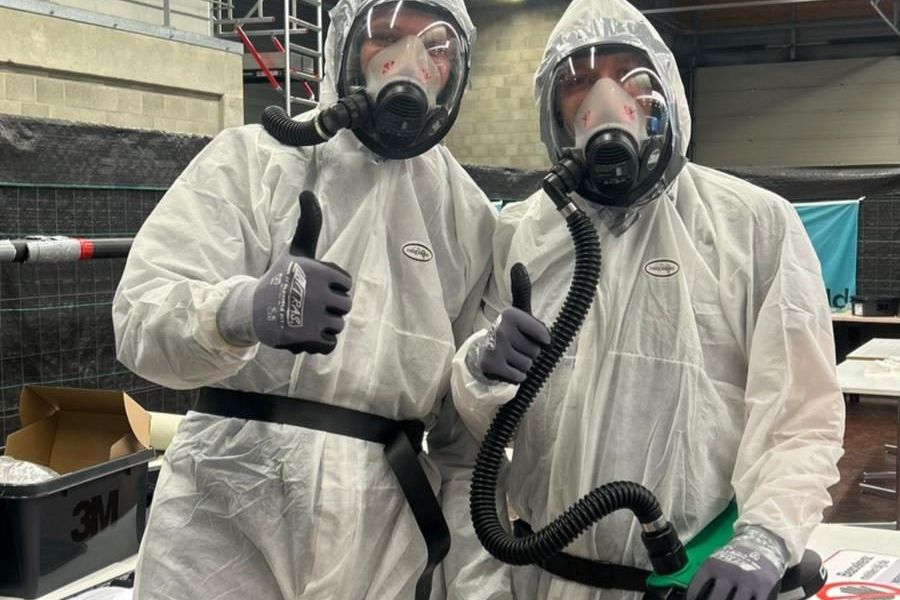
Two people in white disposable coveralls and full-face masks with hoses, giving a thumbs up
Photo: Credim

When you absolutely must not start yourself

There are situations where you better leave the screwdriver alone. Non-bonded asbestos, such as the crumbly insulation around old heating pipes, is always a job for a licensed company. The same applies to damaged material, of any type, and to glued floor coverings. That black adhesive under your old vinyl often contains asbestos and cannot be unscrewed. You would have to break, scrape or sand it, and that is exactly what you want to avoid.

Also, if you are unsure about the condition of the material, it is wiser to have an expert take a look. A crack you do not see can cause a cloud of fibres during removal. And fibres, you do not want those in your lungs.

Doing it yourself? These safety rules are not a suggestion

If you are allowed to do it yourself, there are a number of rules you must strictly follow. They protect you, your family and your neighbours.

  • First submit a demolition notification via the Omgevingsloket. This is mandatory, even for small areas.
  • Wear a disposable overall (type 5) and a half-face mask with P3 filter. A dust mask from the DIY store is not enough.
  • Lightly moisten the asbestos with water before unscrewing it. This keeps less dust in the air.
  • Never screw, break or saw. Unscrew the screws and lift the sheet carefully. If you damage the material, stop immediately and call in a professional.
  • Wrap the asbestos airtight in sturdy foil of at least 100 microns. Seal the seams well with tape.

After the work, you take off your overall within the demarcated zone and shower thoroughly. The used foil and gloves go with the asbestos waste. As you can read in our guide on asbestos disposal, you may take the material to the recycling centre yourself, but only if it is correctly packaged and you adhere to the limits.

The three techniques used by a licensed company

When you do call in a licensed removal contractor, it is not done carelessly. Depending on the type of asbestos and its condition, Credim uses one of the three legal techniques. For bonded material with a low risk, a simple handling sometimes suffices. For indoor pipe insulation and for damaged or friable asbestos, we build a hermetic zone with negative pressure. More explanation about which technique applies when can be found on our page about asbestos removal techniques.

Why you call a licensed company for larger or high-risk jobs

The law is not there to make your life difficult. It is there because asbestos fibres are dangerous. As long as the material remains intact, there is little to worry about. But as soon as you cut, break or sand it, microscopic fibres are released that can remain in your lungs for years. These fibres can eventually cause serious diseases. Our page on why asbestos is dangerous explains this in detail.

In addition, there is the legal obligation to process asbestos waste correctly. Mistakes can lead to fines and health risks for your environment. A licensed company like Credim has the knowledge, experience and equipment to do it safely and in accordance with the rules.

In doubt? Let us visit you

It is not always easy to assess whether you can do it yourself or not. If you are unsure about the material, its condition or the area, then plan a free site visit. Our asbestos experts will come to your location, assess the situation and give you honest advice. No obligations, no jargon, just clarity. This way you know exactly where you stand.

Good to know

An asbestos certificate is drawn up by a certified asbestos expert (ADI) and issued by OVAM. Credim removes the asbestos indicated on the certificate but does not issue certificates itself.

Frequently asked questions

Can I remove asbestos myself?
Yes, but only bonded, undamaged asbestos that is screwed and has a surface area of no more than 35 m². You also need to submit a demolition notification via the Environmental Counter. Everything else must be done by a certified removal company.
What is the difference between bonded and non-bonded asbestos?
Bonded asbestos is firmly embedded in another material, such as cement sheets or corrugated sheets. Non-bonded asbestos is crumbly and is found, for example, around pipes or in sprayed asbestos. Non-bonded asbestos is much more dangerous because fibres are released more easily.
What do I do if I accidentally damage asbestos?

Also interesting

  • Which technique do I need?
  • Asbestos disposal
  • Asbestos removal for private individuals
  • Is asbestos dangerous?
No obligation and free

In doubt about asbestos? Request a free site visit.

A certified expert comes by, assesses the situation and gives you a clear, no-obligation proposal.

  • Free site visit
  • Certified & insured
  • Fast and discreet
Free site visitCall 09 396 64 56
Stop working immediately, leave the area and seal it off. Do not clean up yourself with a regular vacuum cleaner. Contact a certified asbestos removal company for safe cleanup.
Is a demolition notification required for removing asbestos yourself?
Yes, even for small areas up to 35 m², you must submit a demolition notification in advance via the Environmental Counter. This is a legal requirement and ensures the government is aware of the asbestos removal.
How should I transport asbestos waste to the recycling centre?
Asbestos must be packaged airtight in double foil of at least 100 microns. At the recycling centre, 200 kg per household per year is free. Friable asbestos must not be taken to the centre yourself; a certified company must do that.