That white, crumbly layer around your heating pipes might be asbestos. Here's how to recognise it, and what you'd better not do.
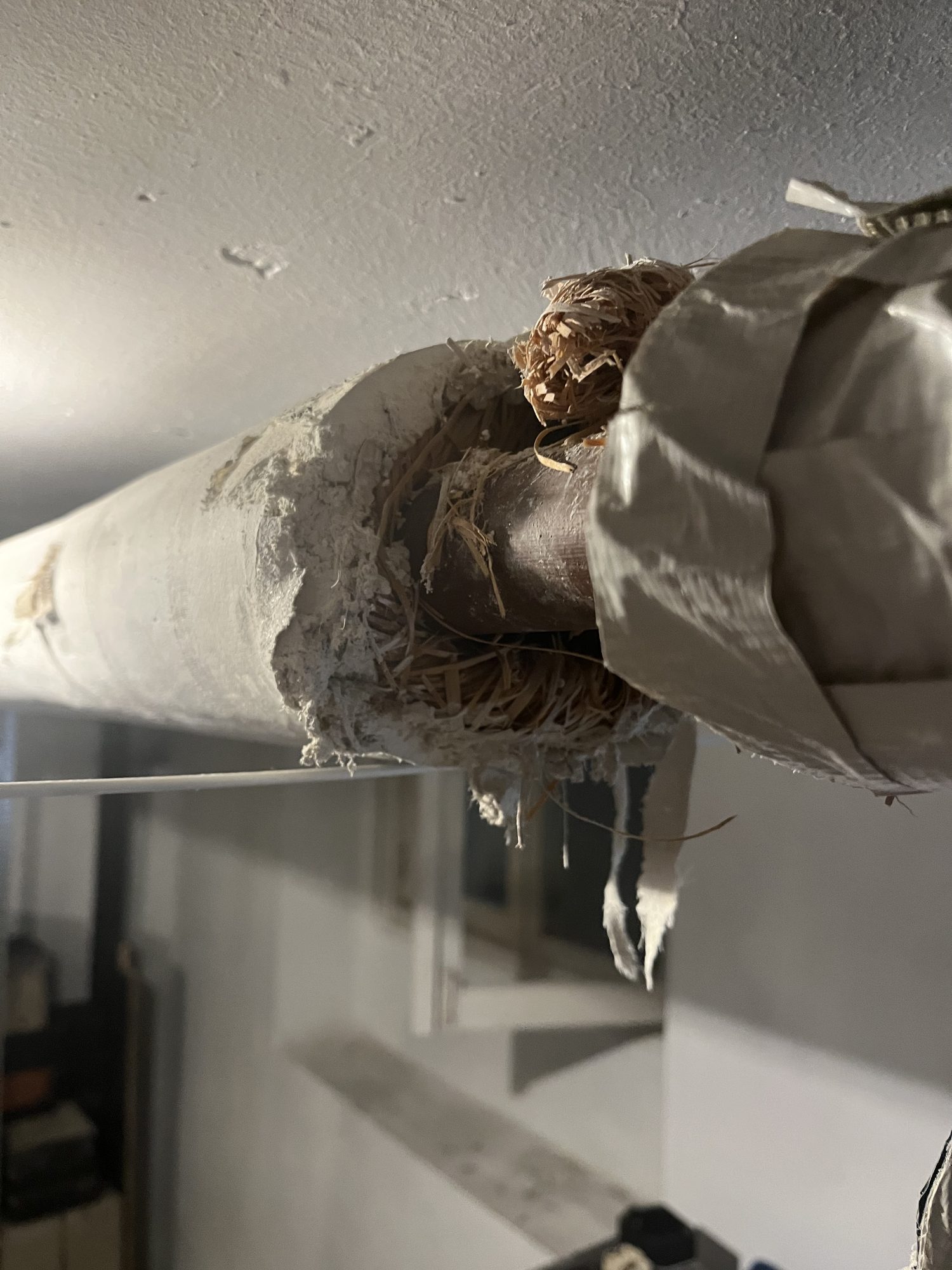
In many houses built before the 1980s, there is a layer around the heating pipes that you cannot simply ignore. It is not ordinary plaster, but often asbestos-containing pipe insulation. You will find it mainly in basements, crawl spaces and utility rooms, where the central heating pipes run. Do you recognise such a layer? Then read on first before you start scraping or sanding.
Asbestos pipe insulation usually looks like a whitish-grey, crumbly plaster layer around the pipes. Sometimes it is wrapped in a white jute cloth or reinforced with plaster bandage. That layer is often already somewhat damaged or powdery on the surface. In homes built before 1980, this is a common sight, especially around the old boiler or in the basement where the pipes come together.
The insulation was applied in the past to prevent heat loss and to protect the pipes. You cannot see with the naked eye that it contains asbestos. It can also be hidden behind a sheet metal casing or in a shaft. That is why it is important, if in doubt, to have a sample taken.
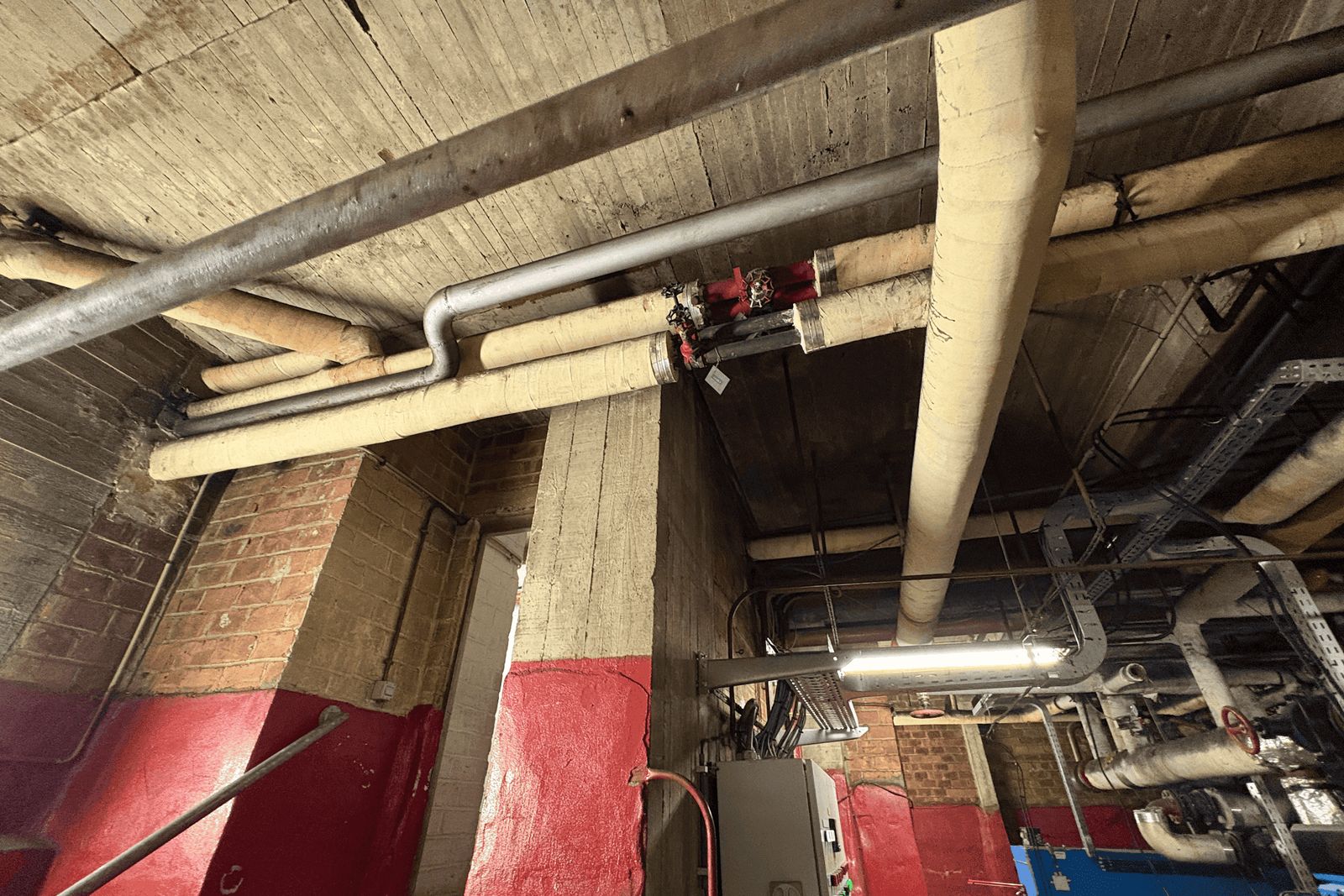
As long as that layer remains intact and you do not touch it, the risk is limited. But at the slightest scratch, drill or sanding work, fibres are released. They are very small and remain suspended in the air for a long time. Inhaling them is exactly what you want to avoid. Therefore: do not scratch, sand or break it yourself. Also do not "quickly" grab a pipe that is covered by it.
The law is strict about this. Friable asbestos, which is what pipe insulation usually is, may only be removed by a licensed asbestos removal contractor. A private individual may not undertake this, not even with a small piece. The risk of fibre release is too great and the chance of spreading it throughout the house is real.
You cannot say with certainty whether it is asbestos based on its appearance. Sometimes it looks like ordinary plaster or mineral wool. Only a laboratory test can give a definitive answer. An asbestos sample analysis is therefore the only reliable way. A certified asbestos expert takes a small sample and has it analysed. Within a few days you will know whether it contains asbestos and which type it is.
That knowledge is not only important for your health, but also for the renovation or sale of your home. Since 23 November 2022, an asbestos certificate is mandatory when selling a building built before 2001. That certificate is drawn up by a certified asbestos expert and issued by OVAM. It clearly indicates where asbestos is present, including in that old pipe insulation.
At Credim, we always remove indoor asbestos pipe insulation in a hermetic zone: we seal the room airtight and put it under negative pressure. This is to prevent fibres from leaving the work area. We calculate the quantity in running metres of pipe.
We work throughout Flanders, from West Flanders to Limburg. The waste is packed airtight and taken to an approved processor. You do not have to arrange anything yourself.
Are you unsure whether the insulation around your pipes contains asbestos? Then first contact an asbestos expert for a sample analysis. Afterwards, we can remove it for you.
A certified expert visits, assesses the situation and gives you a clear, no-obligation proposal.